
Oneida County Deed Records Lookup
Oneida County Deed Records are supported by a strong official Register of Deeds office with online tools, index files, tract indexes, and property watch alerts. If you need a deed, a certified survey map, a plat, or a way to search the land record chain from home, the county gives you a direct path. The office is structured around online access and office access together, which makes the county one of the easier places to work through deed records in a practical way. The official page also links directly to the search tools and fee information you need to keep the process moving.
Oneida County Deed Records Overview
The Oneida County Register of Deeds office is at Oneida County Courthouse, P.O. Box 400, 1 S. Oneida Ave., Rhinelander, WI 54501. The phone is 715-369-6150, the fax is 715-369-6222, and office hours are Monday through Friday, 8:00 AM to 4:30 PM. Kyle Franson is the elected official. The office is open and the research notes say users should view the open notice for office requirements and call for additional information. That makes the office easy to reach and clear about its public role.
Oneida County's official page provides a full set of record access tools. Those include RecordEASE Web, Grantor and Grantee Index Files, Manual Tract Index Pre-1997, Oneida County Property Watch Alert, fee schedules, recording and eReturn information, and a land records system map with GIS tools. That is a strong county setup because it lets a user move from an online search to a deeper tract or index review without leaving the county site.
The office records all real estate documents affecting ownership, easements, mortgages, satisfactions, land contracts, name changes, powers of attorney, federal tax liens, plats, and certified survey maps. It also files vital records and military discharges. That list shows why deed records in Oneida County are part of a much larger records system. The office is not just storing deeds. It is maintaining the chain of real property and related documents that support title and public notice.
The manual tract index before 1997 and the grantee and grantor index files are especially useful because they give older record access a clear structure. If you are working a chain of title or trying to connect a parcel to an older filing, those tools are exactly the kind of local support that makes Oneida County a good place to search.
Oneida County Deed Records Search Tools
Start with the official Register of Deeds page at Oneida County Register of Deeds. It is the county's main source for office details, online tools, index files, and fee information. That page is the best place to begin because it is the county's own route to the deed records system.
RecordEASE Web is the county's online register of deeds access tool, and the official page links to it directly. The office also provides grantor and grantee index files and a manual tract index pre-1997. That combination matters because deed records research often splits into two paths: current online access and older tract research. Oneida County supports both.
The page also links to Oneida County Property Watch Alert. That is useful if you own land in the county or are watching a parcel for changes. It adds a practical security layer to the deed records process and helps you notice recording activity sooner rather than later.
For land context, the official page links to the land records system map and GIS tools. That helps when a deed description needs a boundary check or when you want to compare the recorded document with a current parcel layer. A deed search is faster when the record and the map sit side by side.
The county also links to the Wisconsin Department of Revenue, the Wisconsin Register of Deeds Association, and eReturn and recording information. That makes the county page a practical one-stop hub. For a user, that means the office, the forms, the map, the alert system, and the filing rules are all in one place.
Oneida County Deed Records Fees
Oneida County's official page includes fee schedules, recording information, eReturn information, and cover sheet and TOD/HT-110 forms. Those links matter because they tell users the county expects filings to be prepared correctly before submission. If you are recording a deed or related document, the fee and form side is part of the process, not an afterthought.
For statewide fee guidance, use WRDA recording fees. That keeps the Wisconsin fee structure clear and helps you compare county rules with the state baseline. If a fee question comes up, that is the safest broad reference.
For forms, WRDA downloadable forms is the standard backup. That is where you look for correction instruments and other common real estate forms. It is better to start with the correct form than to try to fix a rejection later.
Transfer return work goes through Wisconsin eRETR. The state statutes provide the legal frame for the recording process. Wis. Stat. ch. 706 covers conveyances, Wis. Stat. § 77.22 sets the transfer fee, Wis. Stat. § 77.25 lists exemptions, and Wis. Stat. § 77.255 addresses return exemptions and confidentiality. Wis. Admin. Code ch. Adm 70 covers eRecording standards. Those are the rules behind the county process.
If you need a broader property law path, the Wisconsin State Law Library real property guide at Wisconsin real property law guide is a good backup. It helps when a deed records search turns into a title or legal description question.
Oneida County Deed Records Images
The official county register page is the best source for the office, the tools, and the current records workflow.
Source page: Oneida County Register of Deeds.
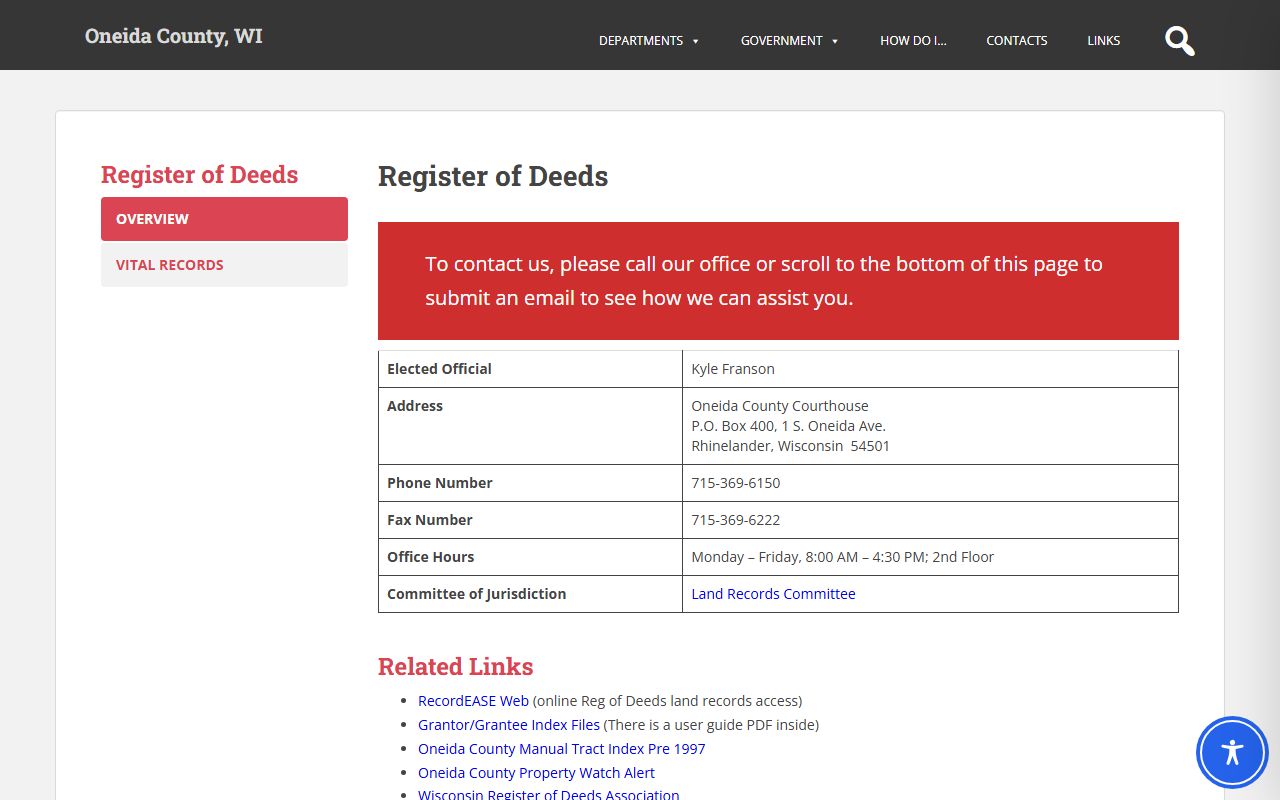
That keeps the page anchored to the official office and its search tools.
Wisconsin Deed Records Guidance
Oneida County fits inside the statewide Wisconsin Register of Deeds system. The Wisconsin Register of Deeds Association at Wisconsin Register of Deeds Association explains the county office role and the long history behind the office. That state frame matters because Oneida County's local tools are strong, but the underlying rules are still Wisconsin rules.
The Wisconsin Historical Society local government records page at Wisconsin Historical Society local government records is useful if your deed records search turns into older land history or archival material. The State Cartographer's parcel data page at Wisconsin parcel data is also useful when a deed description needs a current land layer for comparison.
For the legal framework, use the state statutes directly. Wis. Stat. ch. 706, Wis. Stat. § 77.22, Wis. Stat. § 77.25, and Wis. Stat. § 77.255 explain the transfer and exemption structure. Wis. Admin. Code ch. Adm 70 covers eRecording standards. Those are the rules that sit underneath the county office and its online tools.
Oneida County is especially helpful because the official office page gathers so many links in one place. That means a user can move from search to tract index to property watch alert without jumping between unrelated sites. For deed records work, that is the kind of structure that saves time and keeps the search focused.
Note: In Oneida County, the official register page should drive the search first, with RecordEASE, tract indexes, and the alert system used as needed.