
Search Wisconsin Deed Records
Wisconsin Deed Records are recorded at the county level, but a good search usually starts with more than one clue. You might know a county, a city, a parcel number, an owner name, or only a street address. This site is built to help you move from that first clue to the right register of deeds office, land records portal, parcel map, or copy request path. Wisconsin keeps deed records through county recording offices, while city assessor and county land information pages help confirm the parcel behind the document. When those pieces are read together, the search gets faster and more accurate.
Wisconsin Deed Records Overview
Wisconsin Deed Records Search
Wisconsin Deed Records are not kept in one statewide county book. They are recorded by each county register of deeds office, which means the search path changes depending on where the land sits. Some counties rely on Tapestry EON for occasional users and Laredo for daily users. Some add local land records portals. Some pair the deed search closely with a county GIS map or property tax listing. That variation is why the county and city guides on this site matter. The public record is statewide in structure, but local in access.
The cleanest statewide rule is simple. If you need the actual deed, mortgage, land contract, easement, plat, or certified survey map, start with the county register of deeds office for the county where the property is located. If you need to confirm the parcel first, use the county land information system or city assessor page tied to that property. In Milwaukee, Madison, Green Bay, Appleton, Waukesha, and the other major cities, that city-to-county path is often the fastest route because it narrows the parcel before the document search begins.
The Wisconsin Register of Deeds Association page at Wisconsin Register of Deeds Association is the best statewide overview of the county recording system.
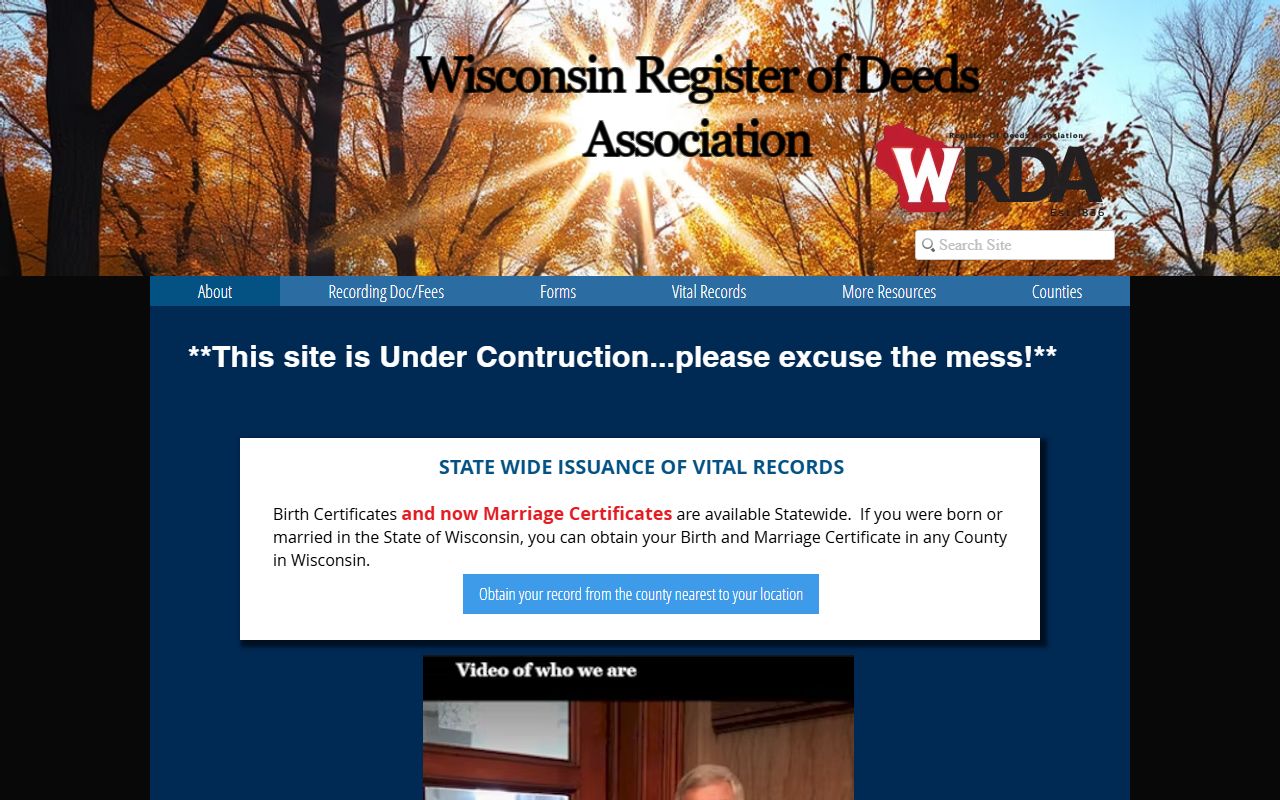
That official source is useful because it explains the county register framework that every local deed records page on this site depends on.
How Wisconsin Deed Records Work
Wisconsin Deed Records work best when you treat parcel tools and recording tools as one workflow instead of separate systems. The county register of deeds keeps the recorded instrument. A county land information page, tax parcel search, or city assessor page helps confirm that the parcel in front of you is the same parcel described in the instrument. That matters when a property has multiple owners, similar street names, or a long legal description. The map and parcel side do not replace the recorded document. They make it easier to reach the right one.
The same pattern holds across the state. A county page may emphasize the register office, the land records portal, the tax parcel layer, the GIS map, or a survey search tool because those are the strongest local assets in the research. A city page may emphasize the city assessor because users often know the city first and the county office second. Both approaches lead back to the same basic answer: the county register holds the deed record, and the parcel tools help you avoid mistakes before you ask for a copy.
That is also why the site uses county guides and city guides together. A county page is useful when you already know the county. A city page is useful when you know Milwaukee, Racine, Beloit, or Sun Prairie but have not yet tied the property to the right county recording office. The record itself stays county-level. The public search path can start from either direction.
Wisconsin Deed Records Fees and Forms
Wisconsin Deed Records follow a statewide fee structure for most real estate instruments, but the local county office still controls how the request is handled, whether public terminals are available, and which search tools are offered. The base recording fee is generally $30 per document. Copy fees are usually $2 for the first page and $1 for each additional page, with certification adding $1. Those numbers matter when a search turns into a filing packet or a copy request, especially if the document is long or if a certified copy is needed for a closing or title file.
Transfer return work sits beside the recording fee. If a deed is part of a taxable or reportable transfer, the Wisconsin Department of Revenue eRETR system is part of the process. Standard form support sits with the Wisconsin Register of Deeds Association, and the legal framework behind the recording process sits in the Wisconsin statutes and administrative code. Those state sources are not replacements for the county office. They are the statewide layer that explains why every county page on this site references similar fee and filing rules.
The Wisconsin Department of Revenue eRETR page at Wisconsin eRETR is the right state source when a deed search turns into a transfer-return question.
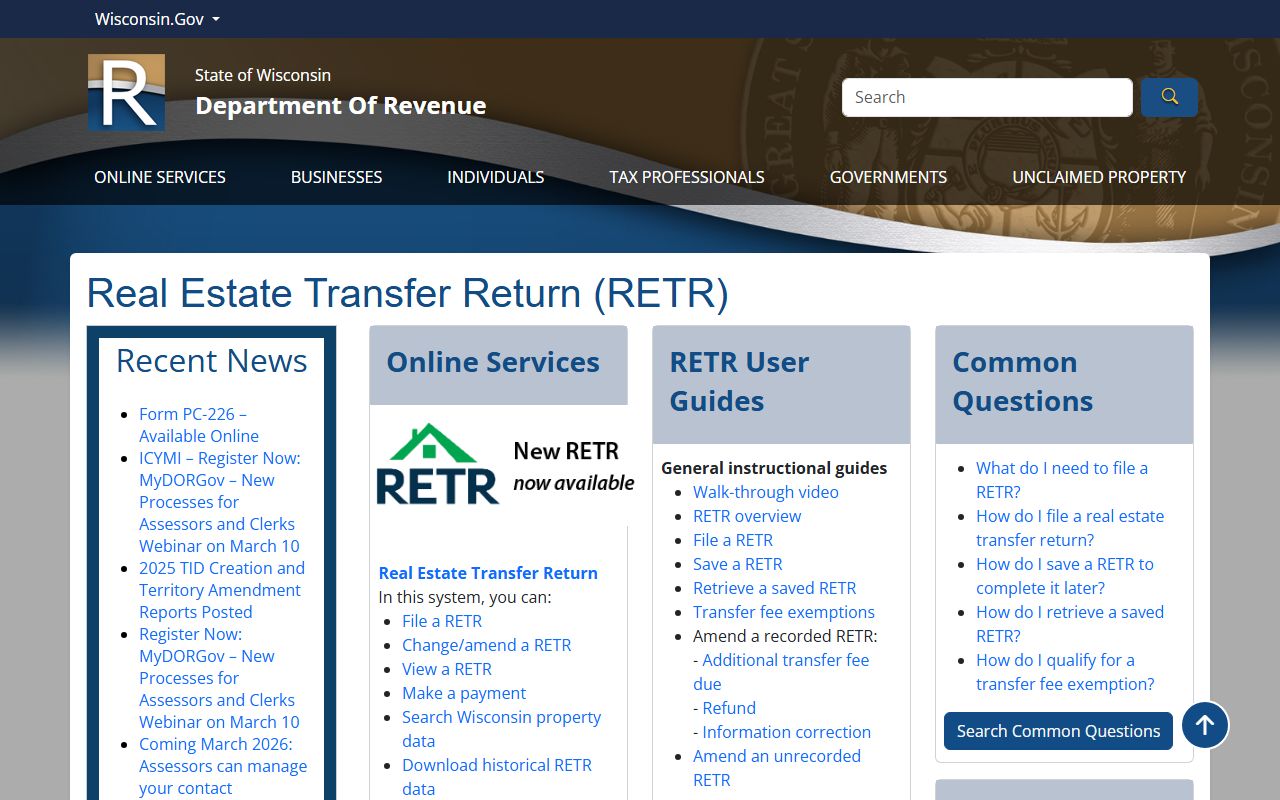
That official image belongs here because transfer returns often sit next to the deed filing itself in a real Wisconsin recording workflow.
Wisconsin Deed Records Rules
Wisconsin Deed Records are shaped by a small group of state rules that appear again and again across county offices. Chapter 706 governs conveyances and recording basics. Wis. Stat. 77.22 sets the transfer fee. Wis. Stat. 77.25 lists transfer fee exemptions. Wis. Stat. 77.255 addresses exemption from return and confidentiality points. Adm. 70 covers electronic recording standards. Those rules do not replace the local office, but they explain the legal frame every county register uses.
The Wisconsin State Law Library is useful here because it puts the recording rules into plain language research context instead of just sending users into a statute list without guidance. If the question is not just where to find the deed but how to understand the deed, how recording works, or how the state structures property transfers, the law library guide is one of the strongest statewide sources in the project research.
The Wisconsin State Law Library real property guide at Wisconsin real property law research is the best state research companion for the deed-records pages on this site.
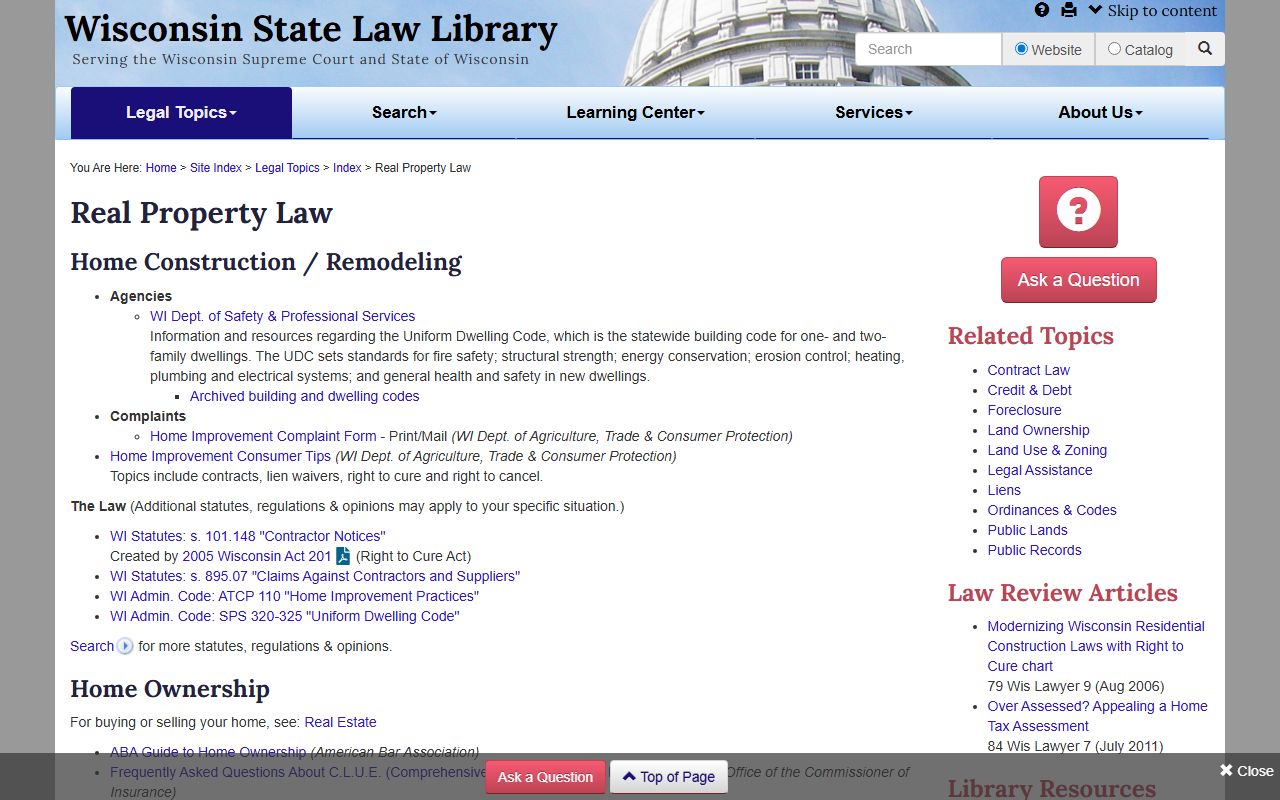
That image belongs in the rules section because the law library guide helps translate Wisconsin recording statutes into a usable public-records workflow.
Wisconsin Deed Records Maps and History
Wisconsin Deed Records are easier to read when the document side and the land side are kept together. The county register gives you the recorded transfer. The parcel map, survey layer, and land records portal help explain where that transfer sits on the ground. That becomes more important as the property history gets older, the legal description gets longer, or the parcel has been split, combined, or reconfigured. That is why so many county guides on this site use county GIS pages, parcel searches, or land information tools as companions to the register office.
There is also a deeper historical layer. Wisconsin land records did not begin when the latest website was launched. Older deeds, grantor-grantee indexes, local government records, and survey materials often shape the title trail behind the current parcel. The Wisconsin Historical Society and the State Cartographer's Office are useful statewide supports when a county deed search turns into a deeper land-history question. They do not replace the county office, but they help connect the current parcel to the broader public-record landscape.
The State Cartographer parcel page at Wisconsin parcel data is the right statewide source when you need a map-layer view of property context.
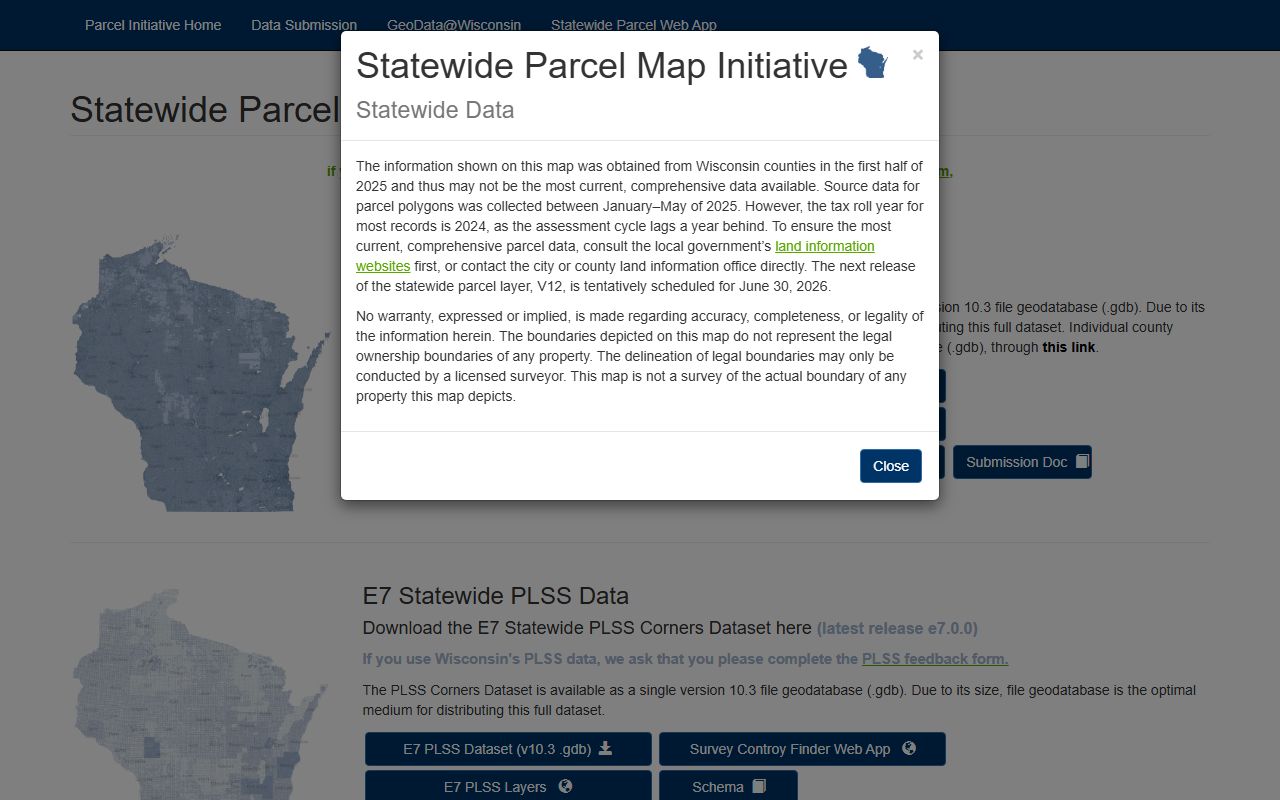
That source fits naturally here because parcel data often helps confirm the same land described in a deed or survey reference.
The Wisconsin Historical Society local government records page at local government records is the source for the image below.
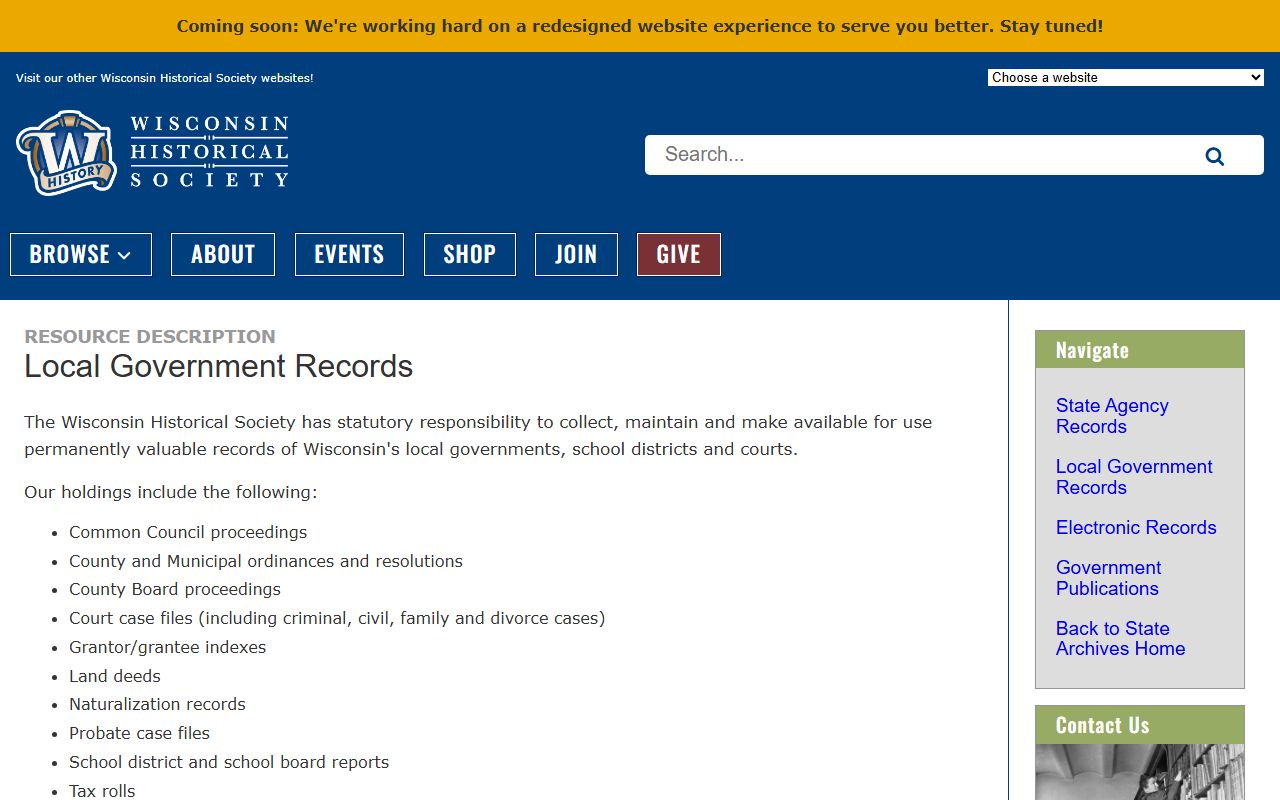
That statewide history resource matters when a deed search reaches beyond a recent parcel transfer and into older county record layers.
Browse Wisconsin Deed Records by County and City
The county guides are the fastest route when you already know the county where the land sits. The city guides are the better route when you know the city first and need help connecting it to the right county recording office and parcel tools. Both sets are written from the local research rather than from a generic template swap, which means they preserve the differences in offices, portal names, parcel systems, and search paths that actually matter when you try to pull a record.
Use the county index when you want the full statewide county list. Use the city index when you want the major city entry points that most people recognize first. Both indexes are designed to help you move from a place name to the official deed-records path without guessing which office really keeps the file.