
Marathon County Deed Records Lookup
Marathon County Deed Records are supported by the county Register of Deeds office, the LandShark search system, and the official land notification tool. If you want to find a deed, check a legal description, or monitor a parcel for new recording activity, the county gives you a practical path. The research here is stronger on the official alert system than on third-party record pages, so this page stays close to the county office, the LandShark reference, and the Wisconsin statutes that shape recording. That is the safest way to keep a Marathon County deed search accurate and useful.
Marathon County Deed Records Overview
Marathon County property records are supervised by the Register of Deeds at 500 Forest Street, Wausau, WI 54403. The office hours are Monday through Friday, 8:00 AM to 4:30 PM. The research shows two phone numbers, 715-261-1470 and 715-261-1010, so either can be used as a county contact point. That office handles deeds, mortgages, liens, land contracts, and plats. Those are the core deed records materials most people need when they are trying to confirm ownership or look at a chain of title.
The county's strongest official tool is the Land Notification service at Marathon County Land Notification. It is an official county web app that alerts property owners when documents are recorded using a personal name, business name, or parcel identification number. The system sends email or text alerts with the type of document and the date it was recorded. That makes it a useful complement to deed records work because it helps owners watch for changes without waiting for a surprise.
Marathon County also has LandShark access for recorded property records. The research notes that LandShark searches by document number, grantor and grantee name, instrument group, date range, legal description, volume and page, parcel ID number, and tract books. That is the kind of search range that lets you move from a name to a document and then into the full land record chain. Even when a public page is weak, the county office and its official alert tool make the record system easy to understand.
The county is large and spread across many towns, villages, and cities, so the records system matters for tax, planning, zoning, and title work. In a county like Marathon, deed records are not just a file drawer. They are the paper trail that supports ownership, land use, and fraud awareness.
Marathon County Deed Records Search Tools
Start with the official alert system at Marathon County Land Notification. That county page is the strongest official source in the research set. It tells you exactly what the service does and how it helps owners monitor recording activity against a name or parcel ID. Because it is official and current, it is the best place to begin.
The county also uses LandShark for online record search. The research says the public can search by address, owner name, or parcel number through the Marathon County Land Records public access portal, and LandShark adds document number, legal description, and tract book search support. That makes it practical for deed records searches that begin online and end with a copied document or a verified legal description.
The broader county property records guide in the research explains that property records document ownership, transfers, and encumbrances of real property. It also notes that the Register of Deeds is responsible for recording, maintaining, and providing access to those records under Wisconsin Statutes § 59.43. That is useful background because it confirms the office role without depending on a weak third-party page as a public link.
If you need to compare a deed description against current land layers, the county zoning and conservation side can help. The research says Marathon County zoning is handled through the Conservation, Planning, and Zoning Department. That is a useful companion to deed records because a deed may be clear on ownership but still need a zoning check before the property is put to a new use.
For a more general Wisconsin framework, use the state resources. Wisconsin Register of Deeds Association explains the county role. Wisconsin real property law guide helps with title and land questions. Those pages give the county work a state-level frame without sending users to weak property-record portals.
Marathon County Deed Records Fees
The research notes a standard copy fee structure in Marathon County. Copies cost $2 for the first page and $1 for each additional page, and certification adds $1 per filed document. That matches the common Wisconsin pattern, so the county fee picture is easy to understand. If you need a copy, a certified record, or a larger search, it is smart to confirm the charge before you place the order.
For statewide fee guidance, use WRDA recording fees. That page keeps the common Wisconsin recording structure in view and is a good reference when you compare counties. It is especially useful in Marathon County because the official county landing page in the research is the land notification tool, not a fee schedule.
For form support, WRDA downloadable forms is the standard source. That is where users go for correction instruments and other common real estate forms. If a document has to be fixed before it is recorded, a proper form is better than a guess.
The Wisconsin Department of Revenue portal at Wisconsin eRETR handles transfer return work. That matters when a deed transfer includes a fee calculation or an exemption issue. The state statutes are the legal base behind it all. Wis. Stat. ch. 706 covers conveyances, Wis. Stat. § 77.22 sets the transfer fee, Wis. Stat. § 77.25 lists exemptions, and Wis. Stat. § 77.255 addresses return exemptions and confidentiality. Wis. Admin. Code ch. Adm 70 covers eRecording standards.
For broader property research, the State Cartographer's parcel data at Wisconsin parcel data can help you line up a deed description with parcel context. If the record work gets more technical, the Wisconsin Historical Society at Wisconsin Historical Society local government records is the next trusted place to look.
Marathon County Deed Records Images
The official land notification tool is the county's strongest source for current recording alerts and parcel monitoring.
Source page: Marathon County Land Notification.
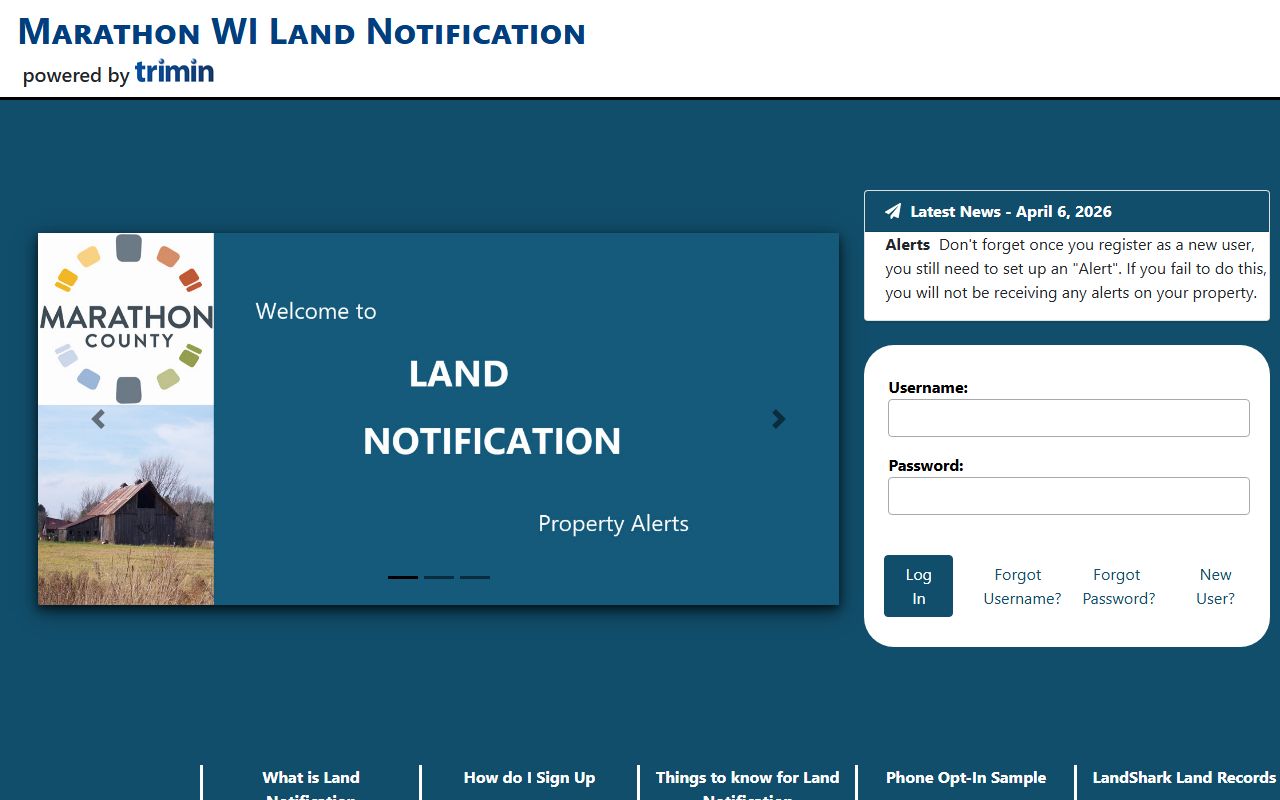
Use it when you want a county-owned alert system tied to recording activity.
The property records background image should be read as supporting context rather than as a primary source.
Source context: Marathon County Land Notification and Wisconsin Register of Deeds Association.
That keeps the page anchored to official and statewide sources.
The second property-records image is another visual reference that should be kept in the same official context.
Source context: Wisconsin Historical Society local government records and Wisconsin parcel data.
It can help visually, but it should not replace the official county tools.
Wisconsin Deed Records Guidance
Marathon County sits inside the statewide Register of Deeds system. The Wisconsin Register of Deeds Association at Wisconsin Register of Deeds Association explains that county offices hold the land record chain and related instruments. That statewide frame is important because Marathon County's records are local, but the rules are Wisconsin rules.
The Wisconsin State Law Library real property guide at Wisconsin real property law guide is useful when you need to understand the conveyance side of a deed search. The Wisconsin Historical Society local government records page at Wisconsin Historical Society local government records can help when a parcel history reaches into older records or archival material.
The statutes are the legal frame behind the county office. Wis. Stat. ch. 706, Wis. Stat. § 77.22, Wis. Stat. § 77.25, and Wis. Stat. § 77.255 explain the transfer and exemption structure. Wis. Admin. Code ch. Adm 70 sets eRecording standards. Those pages are the right support when the deed records search reaches a legal or procedural question.
Marathon County's land notification service is especially helpful because it gives owners an active alert layer. That makes deed records more than a static archive. It turns the county system into something users can watch, track, and trust for ongoing notice.
Note: In Marathon County, the official land notification page and the county Register of Deeds facts should drive the search before any background property-record source.