
Search Lafayette County Deed Records
Lafayette County deed records are built around the Register of Deeds office and the county's online record tools. If you need a deed, mortgage, bond, contract, or a copy of an older recorded instrument, the county gives you a clear way to search by public access, paid online service, or paper copy. That matters because Lafayette County deed records are part of the tax base and the ownership record. When you start with a name, a document type, or an older year, the county office and its online systems can help you move from a rough clue to the exact file.
Lafayette County Deed Records Office
The Lafayette County real estate records page explains that the office files and records official documents affecting real estate. It also says those records are the foundation of the county tax base and ownership history. That is the right place to begin when you need Lafayette County deed records because the office holds the official record series. The county page also points to three access options: Tapestry, Laredo, and paper copies. That gives you a practical search path whether you are a general public user or a more experienced researcher.
The county says paper copies are a good option for the general public or a novice and are usually handled the same day and mailed within one business day. That is helpful when the search is simple and you only need a copy. The page also says payment is required, so the office is clear about the transaction side of the process. Lafayette County deed records are not just available in one format. The county has structured its access so a person can choose the best path for the job.
The county real estate records page at Lafayette County real estate records is the source for the image below.
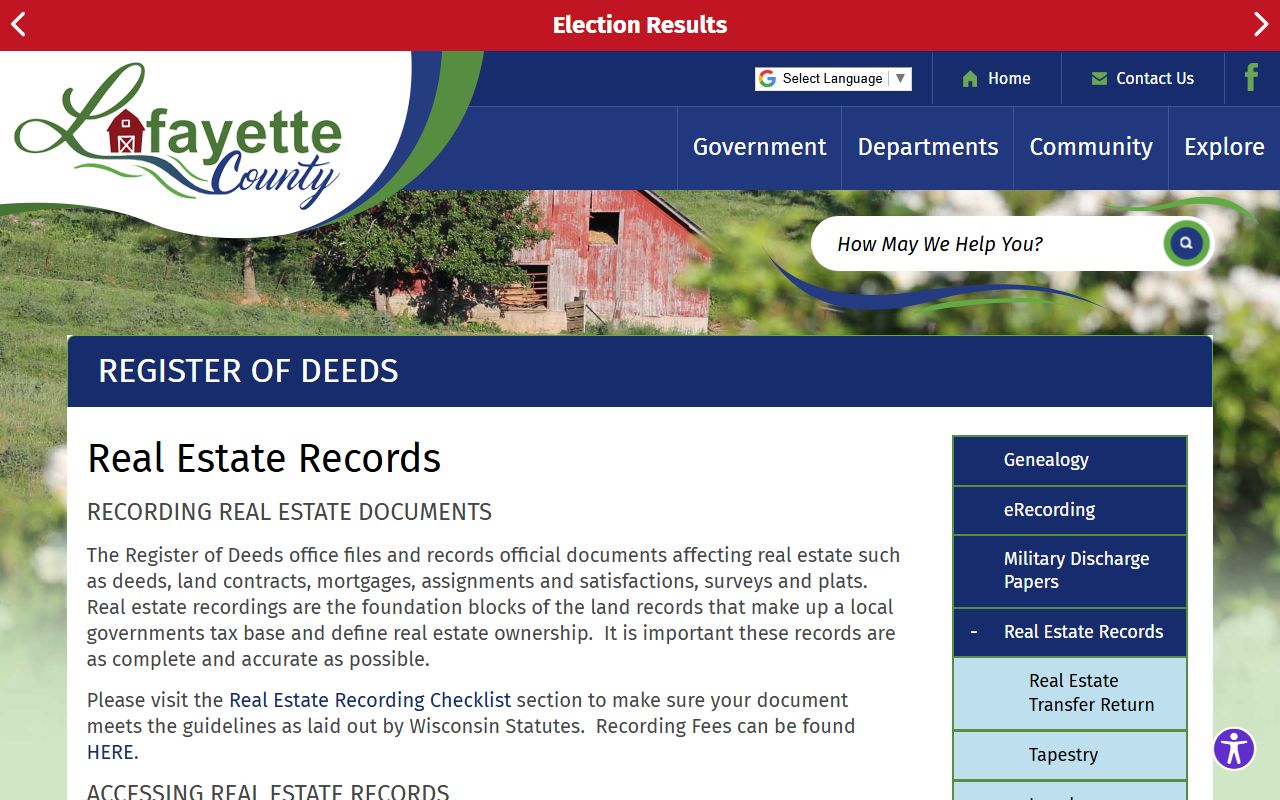
That image links back to the official Lafayette County real estate records page and the office that keeps the county record set.
Lafayette County Deed Records Search
Lafayette County Tapestry is the county's main online access page for older record work. The county says deeds and bonds or contracts are online from 1847, and mortgages are online from 1961. That is a powerful search range because it lets you go back much farther than many simple property portals. For Lafayette County deed records, that means a search can move from a modern property clue all the way back to the first years of county record keeping.
The online service also matters because it helps separate a novice search from a deeper one. If you only need a basic deed view or a document image, Tapestry may be enough. If you need a broader title chain, a paid online service or a paper copy may work better. The county does not hide the access choices. It lists them plainly, which makes the research process more direct and less likely to stall in the wrong tool.
Start with the county service that matches the record you need.
To search Lafayette County deed records, use:
- Grantor or grantee name
- Deed, bond, or mortgage type
- Approximate year or recording range
- Tapestry or paper copy access
The Tapestry page at Lafayette County Tapestry is the source for the image below.
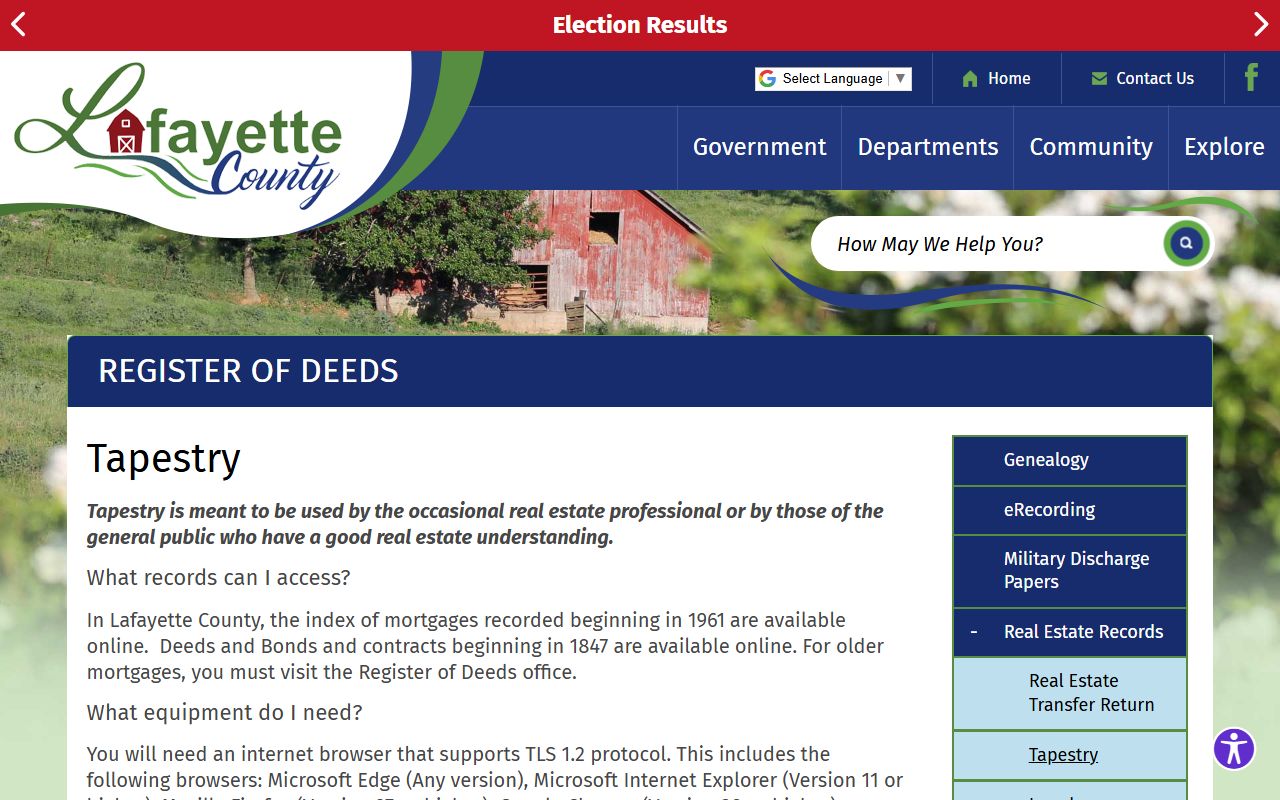
That image points back to the county's online access page for older deed and mortgage records.
Lafayette County Deed Records Fees
Lafayette County deed records follow Wisconsin's statewide recording structure, but the county also keeps its own checklist and recording fee information on the real estate records page. That is useful because the county office is where the request actually lands. The Wisconsin Register of Deeds Association explains the state side of the fee schedule for deeds and similar instruments, and the Wisconsin Department of Revenue eRETR portal handles the transfer return side. Together, those sources tell you what to expect before a recording or copy request goes in.
The county page says paper copies are available, and that matters because copy requests may be the easiest way to get the record you need. The state fee page explains the flat recording fee system and the copy and certification charges. If the deed is part of a transfer, the transfer return should be ready before the office records it. The WRDA forms page and the Wisconsin State Law Library guide help you stay aligned with the standard forms and the real property rules.
Lafayette County deed records are easier to manage when the fee side and the access side are checked together. A document can be available online, by paper copy, or through a paid search service, but the fee structure still matters. If you are ordering several pages or a certified copy, the state recording fee page is the safest place to confirm what the office will need.
The state fee page below is the right source to check before a filing or copy request.
Wisconsin Register of Deeds recording fees explain the statewide schedule for deeds and related documents.
Lafayette County Deed Records and State Rules
Wisconsin Stat. Chapter 706 governs conveyances, recording, and titles. Wisconsin Stat. 77.22 sets the transfer fee rate. Wisconsin Stat. 77.25 lists fee exemptions, and 77.255 deals with exemption from return and related confidentiality points. Those rules matter in Lafayette County because the county office is recording real property documents that affect ownership and the tax base.
The electronic side is in Adm 70. That matters if you are using Laredo or another electronic access path and then moving toward a recording request. Lafayette County deed records fit within the same state recording structure as the rest of Wisconsin. The county's checklist and fees page, the state fee page, and the eRETR portal all sit in the same workflow. That is the useful way to think about a deed filing.
The Wisconsin State Cartographer's Office parcel map downloads can help when a deed needs a broader parcel view. The Wisconsin Historical Society local government records guide can help when older deeds and grantor-grantee indexes need a second look. Those sources do not replace the county office. They help you read the record chain and compare a deed image with the land it describes.
Lafayette County deed records make the most sense when office, online access, and state rules are read together.
Lafayette County Deed Records Help
When Lafayette County deed records are hard to follow, the best approach is to use the county office page, the Tapestry page, and the real estate records page together. That gives you the office, the online image path, and the paper copy option in one workflow. The county also says paper copies are good for the general public or novices and are usually handled quickly, which makes the office friendly to direct public requests.
If the question turns legal, use the statutes, WRDA forms, and the Wisconsin State Law Library guide instead of guessing. The county office can help you find the record, but it is not there to provide legal advice. That keeps the search focused and the office role clear. For most users, the simplest route is to identify the document, confirm the year, and choose the access path that fits the need.
That is the most dependable way to work Lafayette County deed records.