
Clark County Deed Records Lookup
Clark County deed records are handled by the Register of Deeds office, and the office description makes clear that the work is about recording, indexing, and maintaining access to the public record. If you need a deed, mortgage, plat, UCC fixture filing, federal tax lien, military discharge, or another recorded instrument, the county office is the place to start. The county also gives you a strong GIS tool for parcel context. That makes Clark County deed records easier to trace when you are trying to connect a document to the land it describes.
Clark County Deed Records Office
The Clark County Register of Deeds office is at 517 Court Street, Room 303, Neillsville, WI 54456. The office phone number is (715) 743-5163, and the fax number is (715) 743-5254. The county says the office mission is to record, index, maintain, and provide access to real estate documents, UCC fixture filings, federal tax liens, military discharges, vital records, and other instruments as prescribed by Wisconsin statutes. That is a strong fit for deed research because the office handles the actual history of title.
Clark County also notes that the Register of Deeds office began operation on January 1, 1855. That date is useful when you are tracing very old title lines or trying to understand the county record series. Mary Denk is the Register of Deeds. The office also says its purpose in recording is constructive notice and history of title. That is the legal reason the deed record matters. A recording does not just store a document. It marks the public record and helps establish the chain behind ownership.
The county office page also says public access help is available and that certified and non-certified copies can be issued. That makes the office useful whether you need a working copy or a sealed copy. If you are not sure what your deed question needs, the office can still point you toward the correct public record process. It is a better source than a generic directory because it names the office, the record scope, and the purpose of recording in one place.
The county register page at Clark County Register of Deeds is the source for the image below.
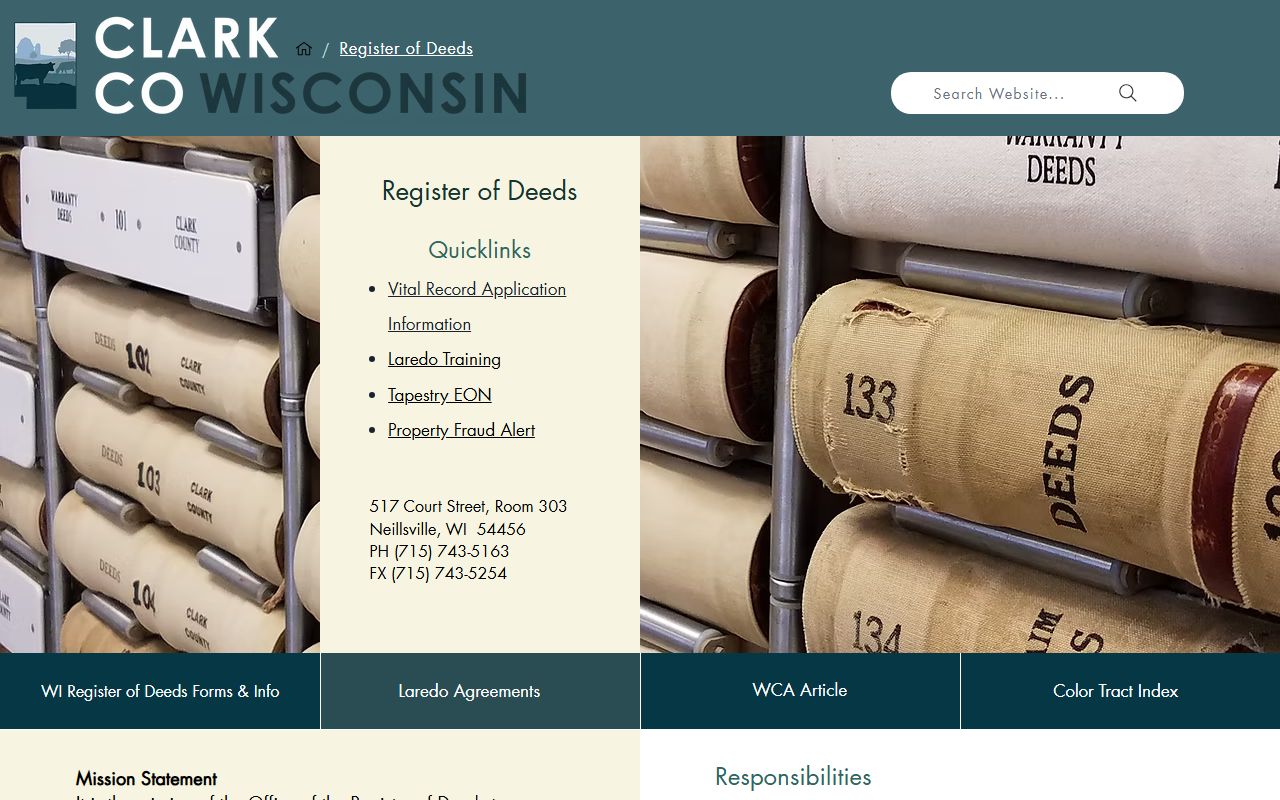
That page is the official local entry point for Clark County deed records.
Clark County Deed Records Search
Clark County gives you a second search path through Beacon GIS. The county's map tool includes parcel data, assessment data, aerial photography, zoning, floodplains, roads, measuring tools, printing, and export options. It also uses an as-is disclaimer, which means you should treat the map as a public aid rather than a final legal opinion. Even so, the map is very useful for deed work because it can help you confirm a parcel boundary, compare assessment context, and match a recorded legal description to the ground.
That pairing matters. The Register of Deeds gives you the official record. Beacon gives you the land picture. When those two sources line up, it becomes much easier to track Clark County deed records without losing time on the wrong parcel or a stale description. The map can also help when a property has changed shape, been split, or been described in old language that no longer matches the tax roll exactly.
The county map and the office are both part of the same search story. Use them together.
To search Clark County deed records, start with:
- Grantor or grantee name
- Parcel number or site address
- Legal description or document number
- Assessment or map context from Beacon
The county clerk page can also help with courthouse context if you need it. That is not the main deed source, but it is a useful county page when you are trying to understand where the courthouse records fit within the county government structure. The Beacon map at Clark County Beacon GIS is the source for the image below.
The Beacon page helps you test the parcel side before you request the file itself.
Clark County Deed Records Fees
Clark County deed records follow the Wisconsin recording fee structure. The Wisconsin Register of Deeds Association explains the statewide flat recording fee for deeds and similar instruments, and it also explains the separate copy and certification charges. That is important because county offices in Wisconsin work within the same fee framework. If you are sending a deed for recording or ordering a copy, the state schedule is the place to check first. It tells you what to expect before the document reaches the office counter.
The transfer return side matters too. The Department of Revenue eRETR portal lets you file, change, view, or pay a real estate transfer return. It also includes property data and historical transfer return tools. If a deed is part of a taxable transfer, the return needs to be ready. The county office will not guess at that step. The state portal and the county recording office have to line up, or the filing can stall.
For forms, the WRDA forms page is useful because it gives a standard set of recording forms. The Wisconsin State Law Library real property guide is also useful because it points to deeds, recording law, and title related sources in one place. When a document needs electronic recording, Adm 70 explains the state standards that county offices use. That keeps the filing rules plain and the process more predictable.
Recording fees and copy fees are not random. They follow the state system, and Clark County applies that system when the deed gets to the office.
Clark County Deed Records and State Rules
Wisconsin Stat. Chapter 706 governs conveyances, recording, and titles. Wisconsin Stat. 77.22 sets the real estate transfer fee rate. Wisconsin Stat. 77.25 lists fee exemptions, and 77.255 explains exemption from return and related confidentiality points. Those rules are central to Clark County deed records because they explain why a document records, what fee may apply, and when a return is not required.
The electronic side is in Adm 70. Clark County uses the same statewide e-recording framework as every other Wisconsin county office. That matters if you are sending a recorded deed through a vendor or working with a title company. The county office is not a separate system. It is part of the same rule set that governs the whole state.
The Wisconsin State Cartographer's Office parcel downloads can help with broader parcel context, and the Wisconsin Historical Society local government records guide can help with older land records and grantor-grantee indexes. Those sources do not replace the county office. They make it easier to read the record chain with care. If you are checking old ownership lines or comparing a deed to a map, that extra context matters.
The county clerk page at Clark County Clerk gives courthouse context, and the image comes from that source.
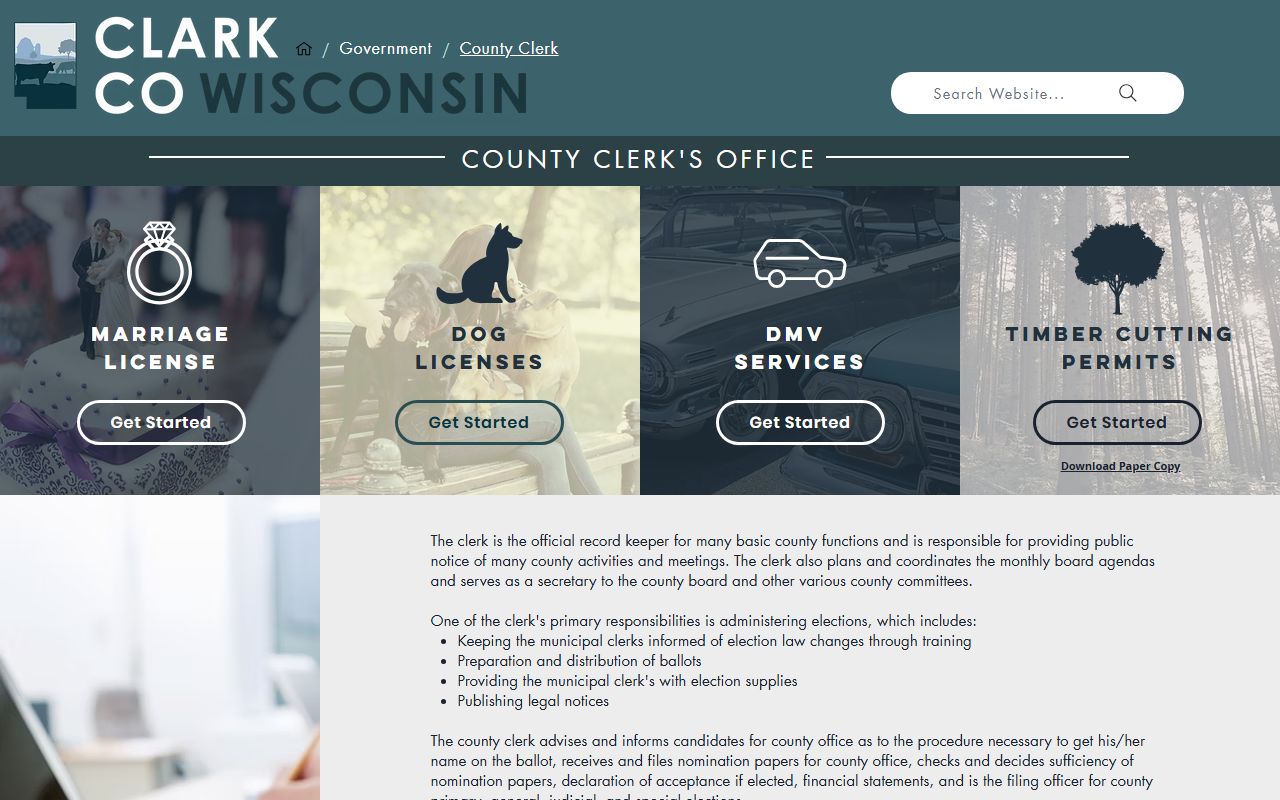
That page is useful when you need the broader courthouse setting around Clark County deed records.
Clark County Deed Records Help
When Clark County deed records are hard to follow, the safest path is to start with the office page and then use Beacon for parcel context. The county says the office provides access help and copies, and the public record purpose is constructive notice and history of title. That means the deed record is not just a file. It is the public notice trail that supports ownership history. If you understand that, the rest of the search becomes easier to read.
Use the office page for the record and the map page for the land. If the property has an older deed chain, the office date of January 1, 1855 helps show how far back the county series goes. If the question turns legal, use the Wisconsin statutes, WRDA forms, and the State Law Library rather than relying on a quick summary. Clark County deed records are public, but public does not mean simple.
The county clerk page is not the deed office, but it is a useful county source when you need courthouse context. Together, the county clerk page, the register page, and Beacon give you a full local picture. That is the best way to keep a search focused and avoid mixing the land record with the wrong office.
That is the practical route for Clark County deed records.