
Search Chippewa County Deed Records
Chippewa County deed records are handled by the Register of Deeds office, and the county gives you a good set of public tools to narrow a search before you ask for copies. If you need a deed, mortgage, plat, certified survey map, tax lien, or a recorded page tied to a parcel, the county office and map tools give you a clear path. That matters because deed work is part record search and part land search. In Chippewa County, you can move from a name or parcel clue to the official record set without losing track of the property.
Chippewa County Deed Records Office
The Chippewa County Register of Deeds office files, records, and issues real estate documents for the county. The office also processes documents sent by e-recording, mail, or in person. That is the official place for Chippewa County deed records when you need archival storage, public access, or a certified copy. The county contact page names Melanie K. McManus and lists the office at Room 111, 711 N Bridge St., Chippewa Falls, WI 54729. The phone number is (715) 726-7994.
The office duties are broad. The county says staff handle e-recording, tract index work, imaging, and web access for daily documents. They also deal with deeds, mortgages, plats, certified survey maps, tax liens, and lis pendens. That is a practical mix for deed research because you can see how the recorded instrument fits with the rest of the land record chain. The county notes that recorded and filed documents run from 1856 to the present, which gives you a long paper trail when you need to follow old ownership lines.
Credit cards are accepted for real estate document copies, which is helpful when you need a copy and do not want to wait on a mailed payment. The county also says its office can provide certified and non-certified copies. That keeps the office useful for both quick reference copies and higher-stakes records needs. For day-to-day deed work, the county office is the main source, not a broad directory or third-party listing.
The county office page at Chippewa County Register of Deeds is the source for the image below.
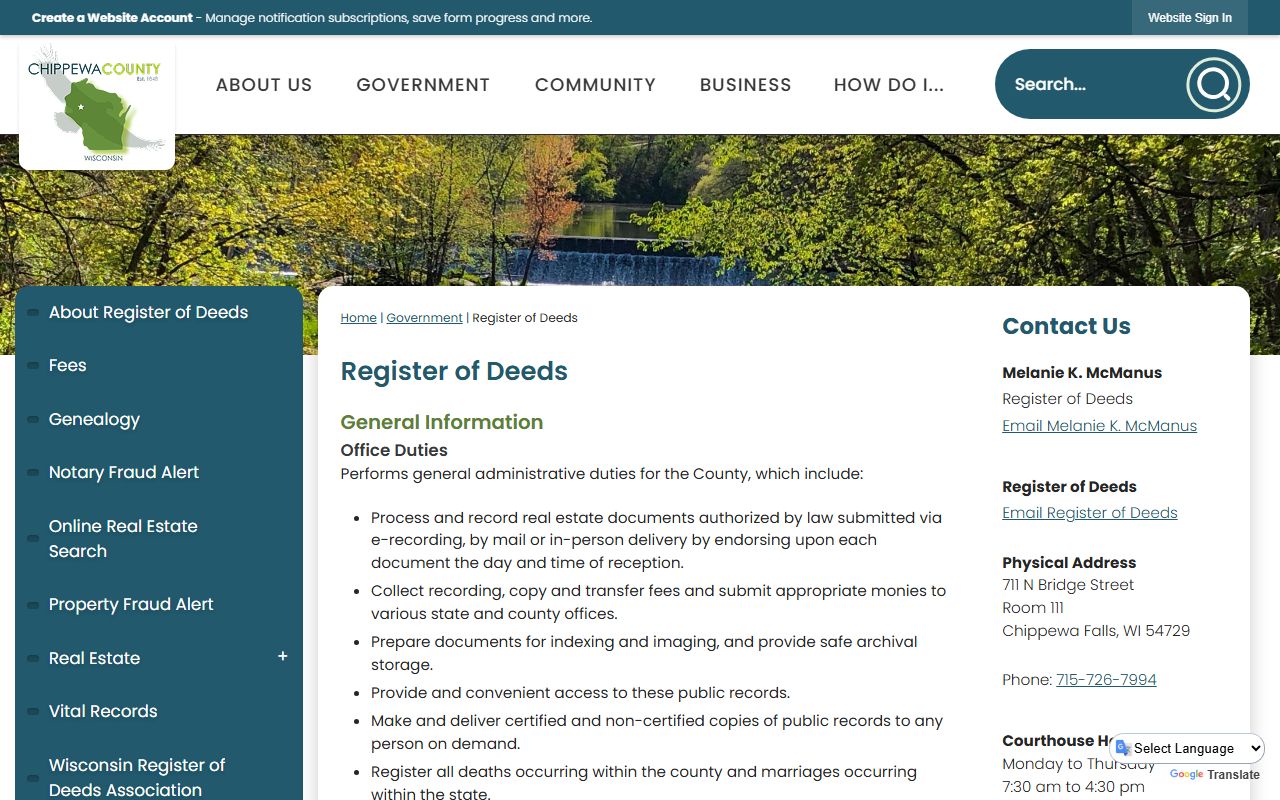
That image links back to the official office page and shows the county record source you will use most often.
Chippewa County Deed Records Search
Chippewa County gives you more than one way to search. The register office page explains that the office records and issues instruments of significance and provides public access to those records. The contact and services page adds more detail. It says the office handles web access of daily documents and maintains the tract index and imaging system. That is useful when a deed search needs both a current document and a path back through older books. In practical terms, the county gives you search, index, and copy support in the same place.
The county's interactive mapping site is the other big tool. Chippewa County says the map is provided as-is and that users must accept the disclaimer before viewing. That warning is worth following. The map is a visual aid, not a legal judgment. Even so, it helps when you need parcel boundaries, location context, or a place to check whether a deed line matches the site you are looking for. For deed records, that can be the step that keeps a search from drifting into the wrong parcel.
Use one name, one parcel, and one clean search path. That keeps the work tight.
To search Chippewa County deed records, you can start with:
- Grantor or grantee name
- Parcel number or site address
- Document type such as deed or mortgage
- Tract index or legal description
The county search tools and the public map fit well together. One gives you the official record side. The other gives you the land side. If the deed is old, the tract index and imaging notes are especially useful because the county records go back to 1856. That long date range helps when the property changed hands many times.
The county's mapping source at Chippewa County interactive mapping is the source for the image below.
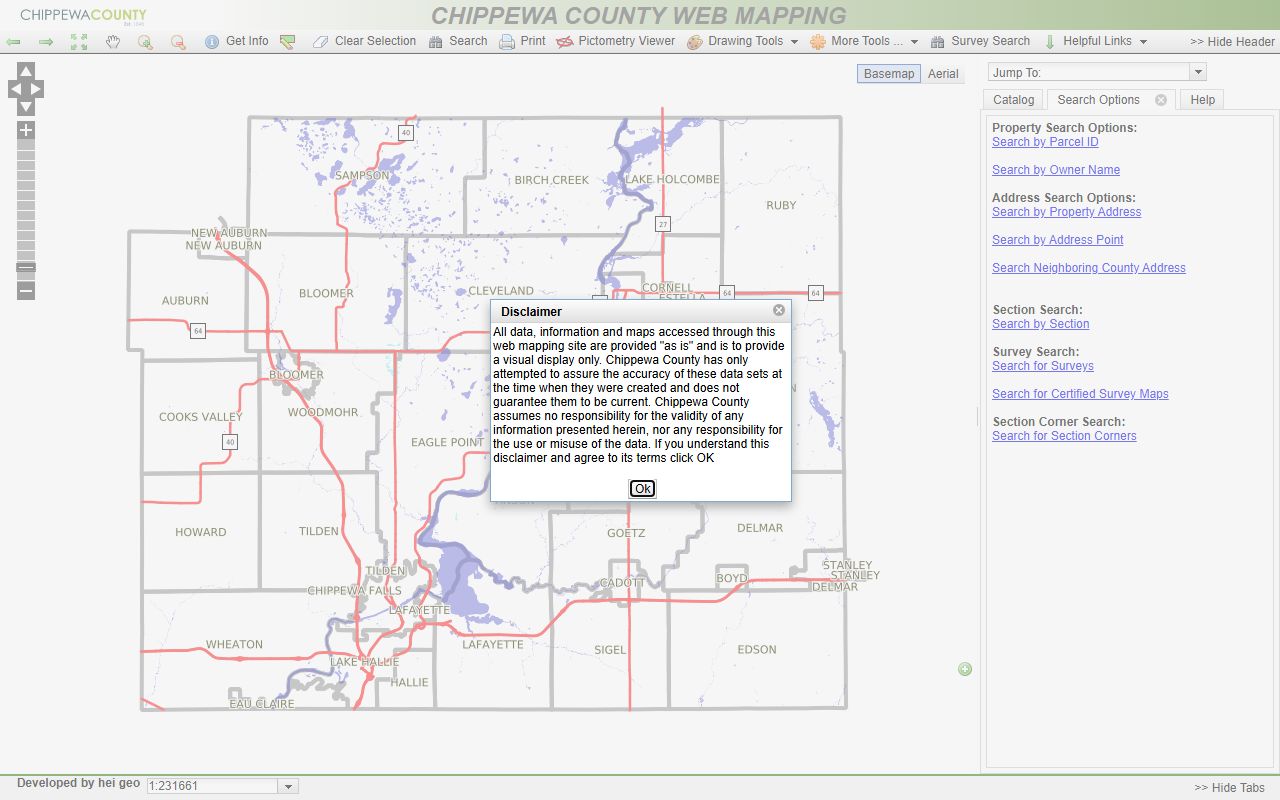
That map is a good way to confirm a parcel before you ask for the record copy.
Chippewa County Deed Records Fees
Chippewa County deed records sit under Wisconsin's statewide fee rules. The Wisconsin Register of Deeds Association explains the flat recording fee for many real estate documents, along with the copy and certification charges. That state schedule matters because the county office collects recording, copy, and transfer fees as part of the normal process. If you are planning a filing or ordering a copy, it is smart to check the state fee page first so you know what the office will ask for when the document is submitted.
The transfer side matters too. The Wisconsin Department of Revenue eRETR system lets you file, change, view, or pay on a real estate transfer return, and it includes property data and transfer fee guidance. That is the part that often sits beside a deed when the document goes to record. If the deed is part of a transfer, the return needs to be complete and ready. The county office works within that system, so the state portal is not optional background. It is part of the workflow.
For standard forms, the WRDA forms page and the Wisconsin State Law Library real property guide are both useful. They help you keep the document format and terms consistent with Wisconsin practice. If you are dealing with an e-recorded document, the electronic rules in Adm 70 tell you how county e-recording is supposed to work. That includes the kind of digital package the office can accept and return.
The state fee page below is the best place to confirm the copy and recording side before you file or request a record.
Wisconsin Register of Deeds recording fees explain the uniform state schedule for deeds and similar instruments.
Chippewa County Deed Records and State Rules
Wisconsin Stat. Chapter 706 covers conveyances, recording, and titles. Wisconsin Stat. 77.22 sets the real estate transfer fee. Wisconsin Stat. 77.25 lists the main fee exemptions, and 77.255 addresses exemption from return and related confidentiality rules. Those rules are part of the deed record path in Chippewa County as much as they are anywhere else in Wisconsin. They explain why a deed is accepted, what must be filed with it, and when a fee may not apply.
The Wisconsin Administrative Code section on electronic recording, Adm 70, helps explain the county's e-recording process. That is relevant because Chippewa County says it processes documents by e-recording, mail, or in person. If your document is electronic, the county still expects the submission to fit the state standard. The code, the fee rules, and the county office all work together here. None of those pieces can be treated as separate on their own.
Chippewa County deed records also fit into the wider state land-record system. The Wisconsin State Cartographer's Office offers statewide parcel map downloads, which can help you check parcel context alongside county records. The Wisconsin Historical Society records guide is also useful for local government records, grantor-grantee indexes, and land deeds. Those sources do not replace the county office, but they help you read the paper trail with more care.
When you need the office source again, go back to the county page. It is the record holder, the copier, and the place where the file stays public.
Chippewa County Deed Records Help
When Chippewa County deed records are hard to follow, the best move is to check the official office page, then the contact and services page, then the map. The county says the office can issue certified and non-certified copies and that it keeps tract indexes and imaging available for daily documents. That gives you a fairly direct path. If you have a name, a parcel, or a document type, you can usually narrow the search without much guesswork.
If the deed is old, the long date range matters. The county contact page says the recorded and filed documents date from 1856 to the present. That gives you a broad window for ownership history, recorded transfers, and earlier deed chains. The county map is helpful, but it is still only a guide. The register office remains the official record source. That is the distinction that matters when you need the real copy or a trusted public index.
For legal interpretation, do not rely on the county office alone. Use the Wisconsin State Law Library guide, WRDA forms, and the statutes instead. Those sources help explain the terms and filing rules without forcing the county staff to give legal advice. For most users, the search path is simple. Find the parcel, check the index, and ask the office for the document or copy you need.
That is the cleanest way to work Chippewa County deed records without losing the thread.