
Buffalo County Deed Records Lookup
Buffalo County Deed Records sit inside the county recording office and the map tools that help you track a parcel. If you are trying to find a deed, confirm a transfer, or see how a parcel changed over time, the county gives you a clear place to start. The recording desk handles the paper flow, and the ArcGIS hub helps you see the land itself. That combination is useful when a deed record alone does not tell the whole story. Buffalo County also posts firm filing windows, so you can plan a visit or mailing with less guesswork.
Buffalo County Deed Records Overview
The county’s document recording page is the core source for Buffalo County deed records work. Documents received Monday through Thursday from 8:00 a.m. to 3:00 p.m. and Friday from 8:00 a.m. to 11:00 a.m. are recorded the same day. Later arrivals move to the next business day. That timing matters when a deed, mortgage, or corrective paper has a closing deadline. The office also lists a standard fee schedule so you can budget before you send a packet or walk in with paper records.
Buffalo County says deeds, mortgages, land contracts, satisfactions, transfer on death forms, terminations of decedent’s property interest, federal tax liens, lis pendens, and change of name documents are $30.00 flat. Transportation project plats are $25.00, and cemetery, subdivision, and condominium plats are $50.00. Copies are $2.00 for the first page and $1.00 for each additional page. Certified copies are $3.00 for the first page and $1.00 for each additional page. Those are the practical numbers most deed records users need first.
The office accepts cash or check payable to Buffalo County ROD. The research also notes that recording and filing fees are uniform under Wisconsin statutes. That helps if you are comparing Buffalo County with another county and want to know whether the base land-record fee structure is local or statewide. In this case, the fee rules are part of the broader Wisconsin deed records system, not an isolated county practice.
For direct contact, use 407 South Second Street, Alma, WI 54610, with phone (608) 685-6230. Donna Carothers is listed as the clerk. That office is the right point for specific recording questions, including how a document will be received, what payee name to use, or whether a document should be rechecked before submission. Strong deed records work starts with the office that actually records the page.
Buffalo County Deed Records Search Tools
Buffalo County’s ArcGIS hub is a useful companion to the recording office. The map site at Buffalo County ArcGIS Online mapping hub provides interactive maps, parcel data, land records layers, aerial photography, zoning, floodplains, and other environmental features. It is public and open 24/7. That makes it a good place to check a parcel before you request a deed, especially if the legal description or property shape needs a second look.
The map hub lets you work from the land outward. You can study property boundaries, then move back to the deed record that created them. That matters because deed records often make the most sense when paired with parcel layers and tax context. The map tools do not replace the recording office, but they make the office records easier to read.
Buffalo County’s research links also point to the county’s real estate recording page at Buffalo County document recording. That page is where the county lists the same-day recording windows, the fee table, and the related recording resources. If you need the recorded version of a deed, a land contract, or a satisfaction, that is the page that tells you how the document enters the system.
For a statewide fee reference, use WRDA recording fees. It is a useful cross-check when you want to compare Buffalo County charges with the Wisconsin standard. The county page and the state page line up on the same basic recording structure.
For older parcel context, the county map data can also help you compare a current tract to earlier versions of the same land. The deed record tells you what was filed. The map tells you how the property sits today. Put together, they give you a cleaner picture of the chain of title.
Buffalo County Deed Records Fees and Timing
Timing is one of the most important parts of Buffalo County deed records work. If your paper arrives within the county’s recording window, it gets the same-day treatment. If it arrives after the cutoff, it waits until the next business day. That is simple, but it protects a closing or transfer from avoidable delay. It also means you should not assume the file is done just because it reached the office.
The fee page at Buffalo County document recording covers the most common land record charges. Since deeds, mortgages, and related instruments are flat-fee items, you do not have to calculate by page count for those core filings. That is useful for deed records work that includes a transfer, a new mortgage, or a corrective document. The copy and certification charges are separate and easy to estimate once you know the number of pages you need.
Buffalo County also makes its recording resources easy to spot. The office links recording standards, a checklist for documents to be recorded, transfer fee information, and Wisconsin Register of Deeds forms. Those links are valuable because deed records are not just about one signature page. They are about fit, form, transfer fee review, and the county’s acceptance rules. If a document is incomplete, the office can reject or delay it, so the checklist is not optional reading.
Use the official county page when you want the cleanest route through the process. It is better than relying on a copied summary elsewhere, and it keeps your request tied to the county’s own language.
Buffalo County Deed Records Images
See the recording page first so the filing window and fee structure stay clear while you work through a deed request.
Source page: Buffalo County document recording.
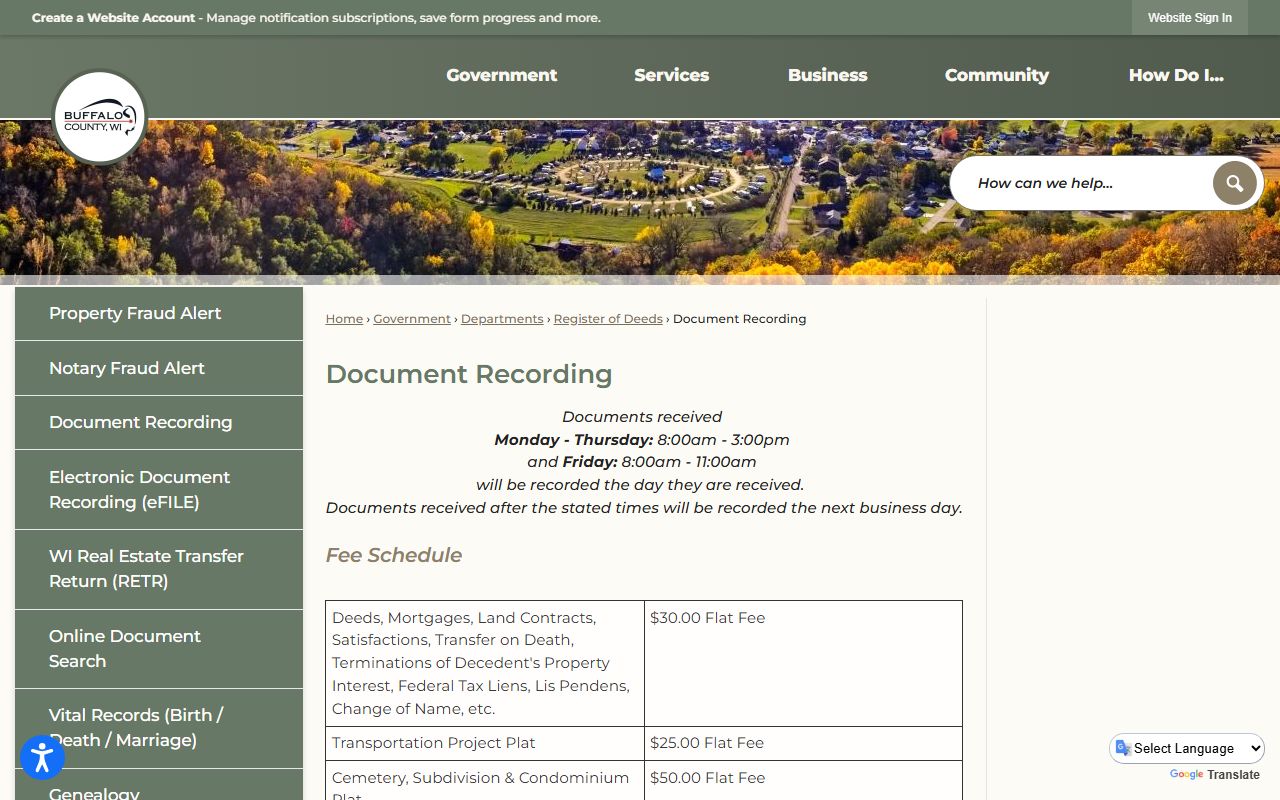
This view points you back to the office that records the document and sets the timing rules.
The ArcGIS hub gives the map side of the same search. It helps you compare parcel shape, land use layers, and aerial photography with the deed record itself.
Source page: Buffalo County ArcGIS Online mapping hub.
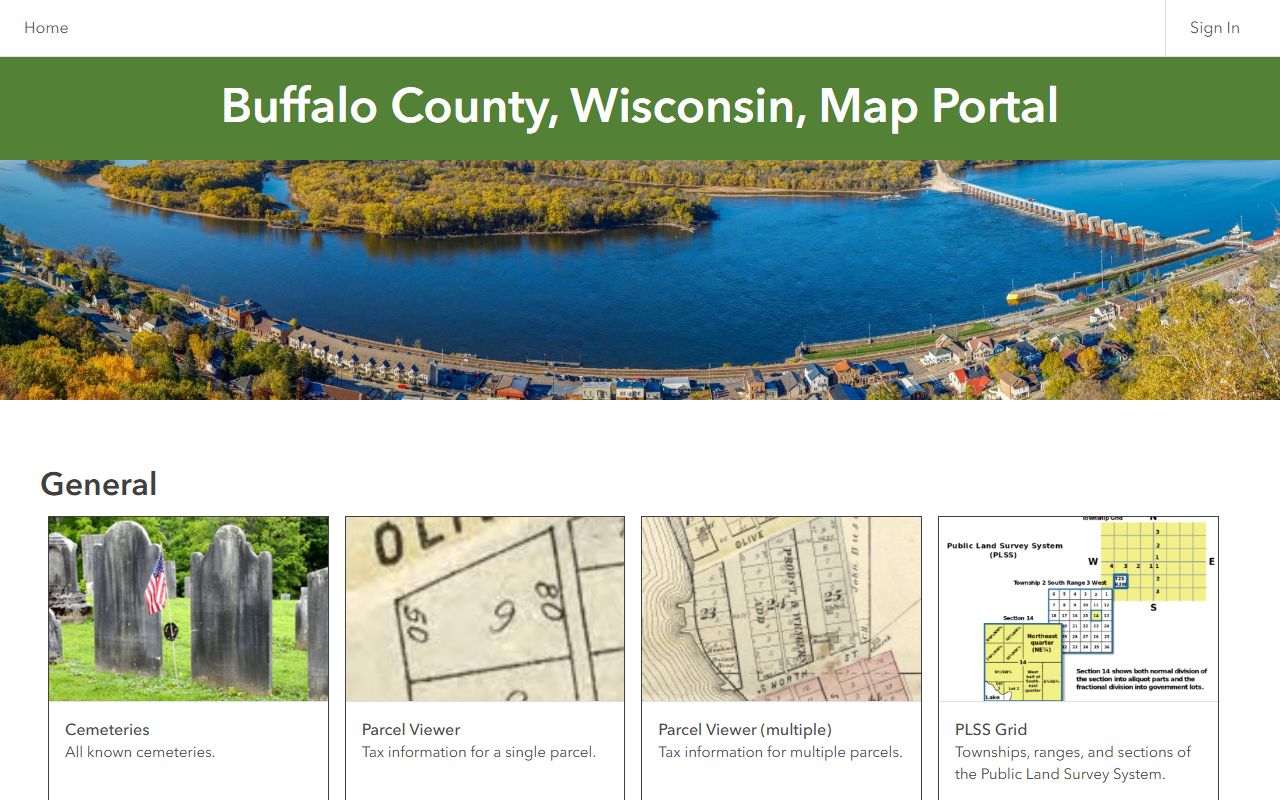
This image shows the land-side tools that make deed records easier to read.
Wisconsin Deed Records Guidance
Buffalo County follows the same broader Wisconsin deed records system as every other county. The statewide association at Wisconsin Register of Deeds Association is a useful overview of how county register offices operate. It explains the county role and helps keep the local office in context.
For forms, the WRDA page at WRDA downloadable forms is the cleanest starting point. The forms page helps when you need a standard deed form, a correction instrument, or another common recording document. That reduces the odds of sending the wrong paper type.
Recording rules and transfer questions connect to state law. Wis. Stat. ch. 706 covers conveyance rules and recording basics. Wis. Stat. § 77.22 sets the real estate transfer fee. Wis. Stat. § 77.25 lists exemptions, and Wis. Stat. § 77.255 deals with return rules and confidentiality. If you record electronically, Wis. Admin. Code ch. Adm 70 explains the eRecording framework and the county’s role in accepting electronic documents.
The state transfer return portal at Wisconsin eRETR is also part of the workflow for many conveyances. For broad real property research, use the Wisconsin State Law Library real property guide. For parcel background, the Wisconsin State Cartographer’s parcel data can help. For older record context, the Wisconsin Historical Society local government records page gives another trusted state source.
When a deed issue crosses into court records, the Wisconsin circuit courts overview at Wisconsin circuit courts helps explain where county court offices fit in the larger system. That does not replace the deed file, but it can help you route a broader records search.
Note: In Buffalo County, deed records and map data work best together, especially when a legal description needs a parcel check before you ask for copies.