
Brown County Deed Records Lookup
Brown County Deed Records are kept through the Register of Deeds and linked land record tools in Green Bay. If you need a deed, a mortgage, or a recorded document, the county gives you two main paths: the office itself and the online search tools. You can review basic land records details, check parcel layers, or ask for copies in person. Brown County also gives clear office hours and search rules, which makes it easier to plan ahead. Start with the public search portal, then move to the office if you need a certified copy or a deeper file check.
Brown County Deed Records Overview
Brown County keeps a strong public path for deed records work. The Register of Deeds office serves as the main county source for recorded documents, while the GIS portal helps you place a parcel on the map and study the land around it. That mix matters when you are trying to match a deed to a tax parcel, a street address, or a legal description. The county also makes room for users who need a quick walk-in search, but it asks you to plan an appointment before in-person searching. That keeps the desk work steady and helps staff handle records with care.
The county search page says in-person searching is free, although print fees still apply. Laredo and Tapestry are both available, and the document images and grantor/grantee index run from 2/1/1962 to the present. That date range is important. If your chain of title starts earlier, you may need to use older paper files or ask the office how it handles earlier books and indexes. Brown County also points users to official process help, which is better than guessing. The office is a records office, not a legal adviser, so it can help with access and copying but not with drafting.
For office contact, use the Brown County Register of Deeds at Northern Building, Room 260, 305 E Walnut St., Green Bay, WI 54301. The phone is (920) 448-4470, and the clerk listed in the research is Cathy Williguette. That gives you a direct route if you want a fee check, a question about a legal description, or help finding the right search tool. Brown County is a good example of a county where the deed record system is not one thing. It is a stack of records, indexes, maps, and office rules that work together.
Brown County’s public FAQ also helps with common deed record questions. It explains that a satisfaction of mortgage is the normal way to clear a paid-off loan from the record, not a new deed. It also notes that the legal description often comes from the deed itself, and that clear title calls for a trained title examiner or abstractor. Those points matter because deed records are often used as proof, but they are not a shortcut around careful review. If you are following a chain of title, Brown County gives you enough structure to keep your search focused.
Brown County Deed Records Search Tools
The Brown County search page is the best place to begin a search for recorded land papers. In-person searching requires an advance appointment, which keeps the office flow orderly. The office offers one public access terminal, and the search windows are 8:00 a.m. to 4:30 p.m. Monday through Thursday and 8:00 a.m. to 11:00 a.m. Friday. That schedule is useful when you need to set aside time for a real review instead of a fast look. The county makes the basic search free, but you pay for prints.
Use the official search page at Brown County Register of Deeds search page. Brown County says Laredo is aimed at frequent users and title work, while Tapestry is more suited to occasional users. Both systems point to document images and a grantor/grantee index available from 2/1/1962 to present. That is a solid range for deed records research. If you need to verify a transfer date, buyer, seller, or document type, that index is the first stop.
The county GIS portal at Brown County maps and GIS gives another way to line up deed records with real land. You can use parcel info, aerial imagery, environmental data, tax district layers, floodplain layers, downloads, and web mapping tools. That helps when a deed lists a legal description you want to compare against parcel shapes. The map view can also help when a parcel has changed hands many times and the old document index alone is not enough.
Brown County also gives good background guidance in its FAQ at Brown County Register of Deeds FAQ. The office says it cannot give legal advice and it cannot tell you if title is good and clear. That keeps the role of the office plain. It records, stores, and provides access. It does not decide ownership disputes. If you need a deeper title opinion, that is a job for a real property lawyer or a title professional.
Brown County Deed Records Fees and Rules
Brown County’s fee schedule matches the state framework for common land records work. Recorded documents such as deeds, mortgages, satisfactions, land contracts, federal tax liens, UCCs, HT-110, and TOD-110 documents are $30.00 flat per document. Filed documents are also $30.00 where no other fee is set. Plats are $50.00. Transportation project plats are $25.00. Copies of recorded documents are $2.00 for the first page, then $1.00 for each additional page, with $1.00 certification. Copies of plats are $2.00 per page. Those numbers help when you are planning a request.
For a state-level fee check, use WRDA recording fees. That page confirms the broad Wisconsin structure and gives another clean point of reference when you want to compare county charges. It is useful if you are sorting out whether a fee is local or simply the statewide rule for the document type.
The fee page at Brown County Register of Deeds fee schedule also lists copy charges and payment rules in one place. The fee schedule says the first copy of a recorded document is $2.00, each added page is $1.00, and certification is $1.00. Payment options include cash, credit or debit with added fees, and cashier's check or money order. Personal checks are not accepted. That makes it easier to plan a deed records request before you call or visit.
Brown County gives clear search limits rather than a same-day recording promise. The office says in-person searching requires an advance appointment, offers one public access terminal, and posts search hours of 8:00 a.m. to 4:30 p.m. Monday through Thursday and 8:00 a.m. to 11:00 a.m. Friday. Those details matter when timing affects a closing review, a transfer check, or a correction document. The office can answer process questions, but the FAQ still draws a hard line at legal advice and document drafting.
Brown County’s FAQ also explains that a mortgage payoff does not mean you need a new deed. What you usually need is a recorded satisfaction of mortgage. That is the kind of practical detail people miss when they are new to deed records. The office is trying to keep the paper trail clean. It is not trying to rewrite the trail after the fact.
Brown County Deed Records Images
Use the county GIS portal to connect the map to the deed record. The same site shows parcel layers, floodplain data, and land use tools that can help you read a legal description with more care.
See the source page for Brown County GIS here: Brown County GIS and mapping portal.
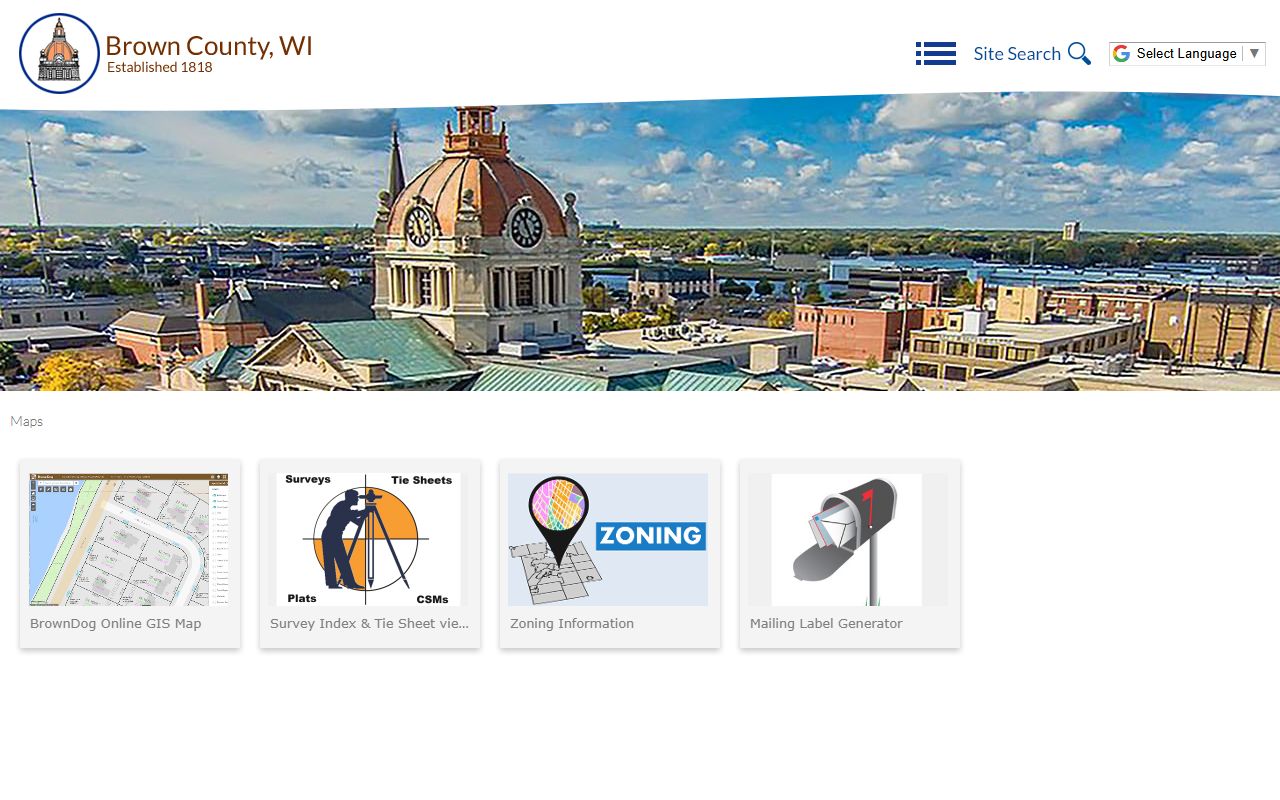
This map view is useful when a deed description and a parcel line need to match.
The Register of Deeds search page shows how Brown County handles real estate document access and which tools support document images and indexes.
See the source page for Brown County deed records search here: Brown County Register of Deeds search page.
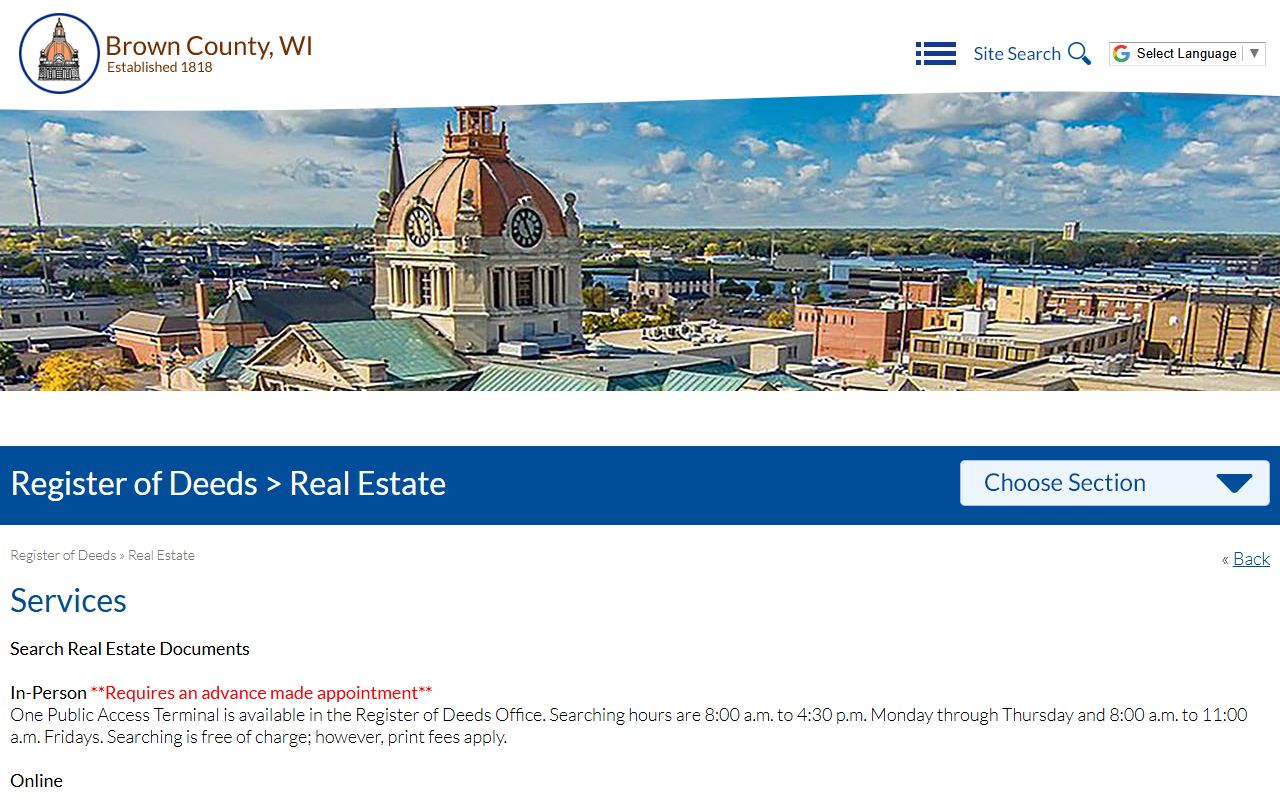
That search page is the right place to start when you need a recorded deed or an image date range.
Wisconsin Deed Records Guidance
County deed records sit inside a state system. Wisconsin Register of Deeds offices are part of a long county-level structure, and the statewide association explains that each county has a Register of Deeds. The state page at Wisconsin Register of Deeds Association is a useful starting point when you need the broader picture. It helps place Brown County inside the same rules and customs used across Wisconsin.
For forms, use WRDA downloadable forms. That page gives standard real estate forms and corrective tools. It matters when you are dealing with a deed correction, a termination, or a related recording problem. The forms page helps keep your filing format aligned with what county offices expect.
State transfer fee rules are in Wis. Stat. § 77.22, and the exemption rules are in Wis. Stat. § 77.25. Those sections help explain why a deed may need a transfer return and when an exception applies. The related confidentiality and return rules appear in Wis. Stat. § 77.255. For electronic recording, see Wis. Admin. Code ch. Adm 70 and the transfer return portal at Wisconsin eRETR.
Wisconsin’s real property rules in Wis. Stat. ch. 706 matter because they govern many conveyance basics, including legal descriptions and conveyance form. The Wisconsin State Law Library guide at real property law research adds a broader research path, while the State Cartographer’s Office at Wisconsin parcel data helps when a deed description needs map context. If you are tracing older land histories, the Wisconsin Historical Society at local government records is another solid reference point.
If your deed records question overlaps a court file, the Wisconsin circuit courts overview at Wisconsin circuit courts explains the county court structure. That can help when a property issue and a court record touch the same parcel or person. The deed office and the court office are separate, but both can matter in a full research trail.
Note: Brown County deed records work goes fastest when you match the document image, parcel map, and legal description before you ask for copies.