
Bayfield County Deed Records Lookup
Bayfield County deed records are easier to work with when you use the county tools in the right order. The Register of Deeds holds the official record set, while Novus Public Access and the county GIS maps help you find the parcel side of the story. That mix matters when you need a deed, a parcel history, or a way to match a legal description to a site. Bayfield County deed records are best searched with one clean clue, then confirmed with the map, the parcel data, and the county office if a copy is needed.
Bayfield County Deed Records Office
The Bayfield County Register of Deeds office is the place that keeps the official deed record set. The county lists the office at 117 E Fifth St., Washburn, WI 54891, and the land records administrator contact at 117 E 5th Street, P.O. Box 878, Washburn, WI 54891. The office hours are Monday through Friday, 8 a.m. to 4 p.m. If you need the local source for Bayfield County deed records, this is the office that owns the file and the indexes behind it. The historical society record guide also confirms the courthouse location in Washburn.
The office page is the best local anchor because it keeps you close to the real source. Bayfield County records do not live in a generic statewide drawer. They live in this county office, and the office page gives the local contact structure you need when a deed, mortgage, plat, or survey reference is hard to match. The county also keeps the records in a way that supports public access rather than hidden search rules. That is important when you are trying to trace a parcel through changing ownership.
Bayfield County has long record history too. The historical society guide at the Bayfield County courthouse record guide notes that the Register of Deeds holds birth records from 1879, marriage records from 1869, and death records from 1870. That is not a deed rule by itself, but it shows how far back the county record system runs. A county with that kind of record depth usually has a strong indexing tradition, and that helps when deed work reaches into older books.
The county register page is the official source for local record access, and the image below comes from the Bayfield County Register of Deeds page.
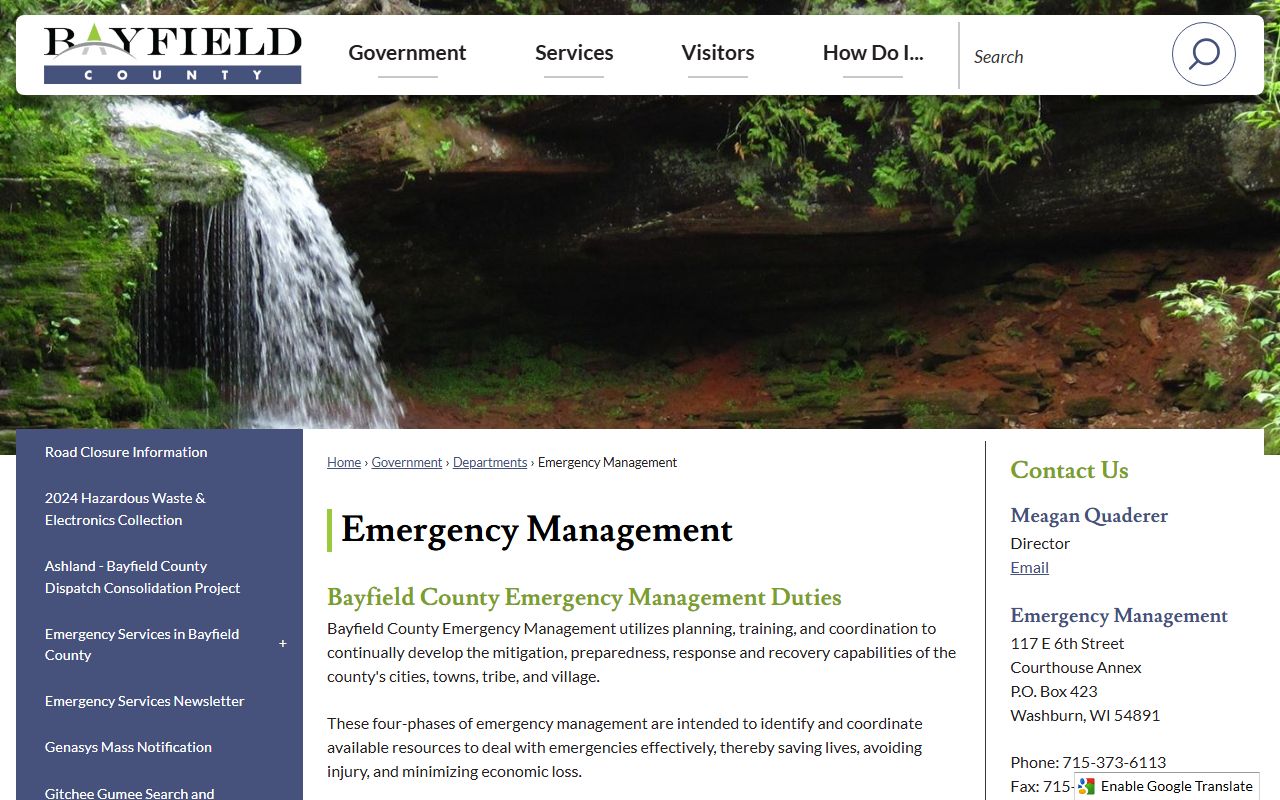
That office page is the clearest local contact point when a Bayfield County deed search needs a human answer.
Bayfield County Deed Records Search
Novus Public Access is one of the best starting points for Bayfield County deed records because it combines property tax and land record information in one place. The county says you can search by last name, site address, tax ID, legacy PIN, or PIN. Once you pick the parcel, the property history appears with the deeds and assessment information. That is a practical way to move from a name to a parcel and then from a parcel to the record itself. The tax record, tax bill, and statement tabs are there if you need more context.
Bayfield County also gives users map tools that support the deed search. The interactive web maps page includes a GIS web map, survey records, mailing labels, a statewide parcel map link, and DNR map tools. The county warns users to check the help guide, which is sensible because deed research often turns on one small map detail. If you are trying to line up a deed with a tract or a legal description, the map tools keep the search grounded. The county also makes clear that the records are public, but the user still needs to choose the right parcel.
Start with one clue, then let the parcel side guide the deed side.
To search Bayfield County deed records, you can use:
- Last name or owner name
- Site address
- Tax ID or PIN
- Legacy PIN or parcel reference
That search path is efficient because it puts the parcel history beside the land record. It is the quickest way to see whether a deed line belongs to the property you are checking.
The Bayfield mapping tools are part of the same search story, and the image below links to Bayfield County interactive web maps.
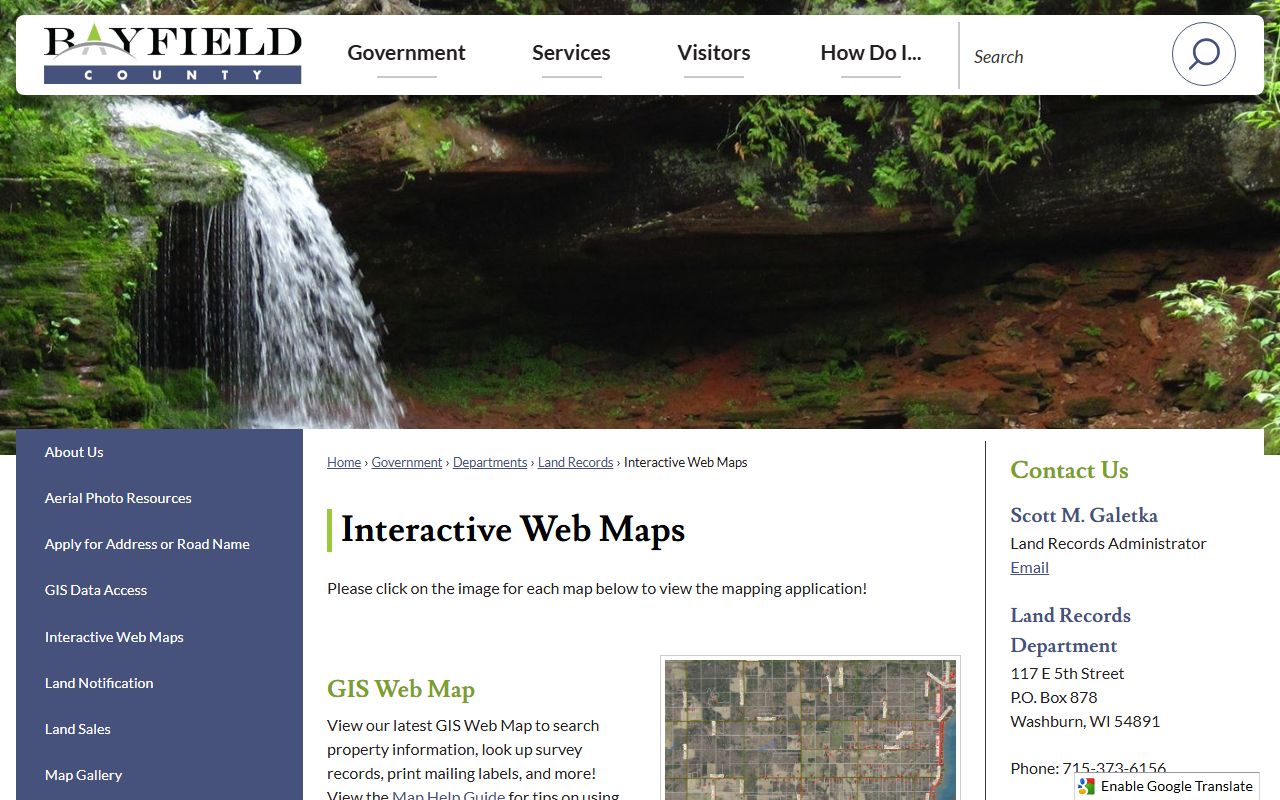
The GIS map is useful when the deed image alone does not explain the parcel on the ground.
Bayfield County Deed Records and Parcel Tools
Bayfield County deed records work best when you think in layers. Novus gives you the parcel history. The GIS web map gives you the land layer. The Wisconsin Statewide Parcel Map download page gives you a statewide parcel view that is standardized across counties. Put together, those tools can help you see whether a deed belongs to a parcel boundary, a tax record, or an older survey reference. That is more useful than a simple name search alone, because land records usually hinge on location as much as on ownership.
The county mapping page also points to georeferenced PDFs, USNG sign locations, silent sport trails, and DNR public land access sites. Those details may not sound like deed work at first, but they help when the legal description ties into terrain, survey history, or a parcel that sits near public land. Bayfield County is large and varied, so that map support matters. It can save a bad assumption. If a deed refers to a tract, the map can tell you where the tract lives now.
The county register page and the land record portal should be read together. One gives the office, the other gives the parcel path. That is the cleanest way to handle Bayfield County deed records without losing time on the wrong record type. The county office page at Bayfield County Register of Deeds stays the best local contact source.
The land records portal below comes from the county search environment, and the image links back to Novus Public Access.
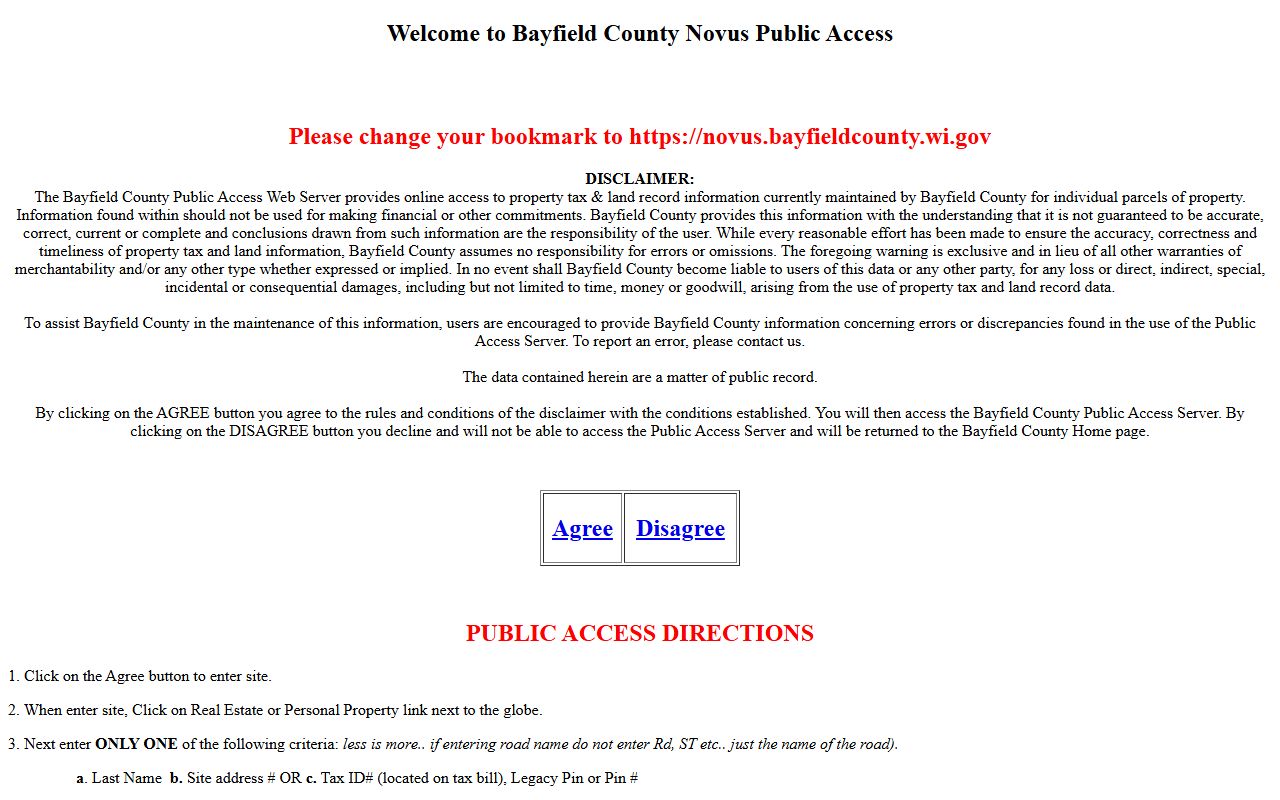
That portal is where parcel history and deed history meet in one place.
Bayfield County Deed Records Fees
Bayfield County deed records follow Wisconsin recording law, so the county fee side starts with the state schedule. The Wisconsin Register of Deeds Association explains the flat recording fee structure for deeds and similar instruments, along with the separate copy and certification fees. The state Department of Revenue eRETR system is the other half of that process because a transfer return may be required before recording. If you are preparing a deed in Bayfield County, the fee and form check should happen before you submit the document, not after the office has already reviewed it. The WRDA forms page gives you standard recording forms when you need one.
The Wisconsin statutes add the legal frame. Chapter 706 explains conveyances and recording. Section 77.22 sets the transfer fee rate, and section 77.25 lists the main exemptions. Section 77.255 covers exemption from return and related confidentiality rules. Those state rules matter in Bayfield County just as they do everywhere else in Wisconsin. If a deed is exempt, you still need to know why. If a transfer return is required, the county office will expect it to be complete. The county does not invent those rules. It applies them.
The Wisconsin State Law Library real property guide is useful when you want a plain explanation of deeds, mortgage terms, and recording titles. WRDA forms are useful when the document needs a standard form rather than a custom draft. If you are working with a title company or an e-recording vendor, Adm 70 helps explain the electronic side of that process. The point is simple. Bayfield County deed records sit inside a statewide system, and the fee rules follow that system.
The county office does not need to guess on these questions. It follows the statute, the form, and the transfer return just like every other Wisconsin county office.
Bayfield County Deed Records Help
When Bayfield County deed records are hard to follow, use the county office, the Novus parcel tools, and the map set in that order. The county is clear that the public access data is not guaranteed to be perfect, so a careful check is still needed. That is normal in deed work. A parcel can have old names, older surveys, and more than one recorded change. Bayfield County gives you the tools to line those parts up, but the record reader still has to compare the details.
If a deed image is missing a piece, the county office can still help with the office side of the record. If the map is what you need, the interactive web maps page gives the parcel context. If the question turns legal, use the Wisconsin forms, the statutes, or a real property lawyer rather than a random summary page. Bayfield County deed records are public, but that does not make every question simple.
The Wisconsin Historical Society also reminds researchers that local government records are often held in area centers rather than at one big statewide shelf. That is useful background when you are tracking older land records or trying to understand where a local record series has lived over time. In Bayfield County, the courthouse and the register office remain the practical starting point.
For most users, the right path is clear. Search the parcel first, confirm the deed history, then contact the office for copies or follow-up questions.